





Editorial Integrity
Making sound real estate investment decisions begins with reliable, data-driven insights. At Ziffy.ai, we offer an AI-native real estate investing, proprietary data-driven trend analysis, investment mortgage programs like DSCR loans, and a network of over 500 investor-friendly real estate agents to deliver the expertise needed for informed decisions. Our content is crafted by experienced real estate professionals and backed by real-time market data, ensuring you receive accurate and actionable information. Through a rigorous editorial process, we strive to empower your investment journey with trustworthy and up-to-date guidance.
Quick answer

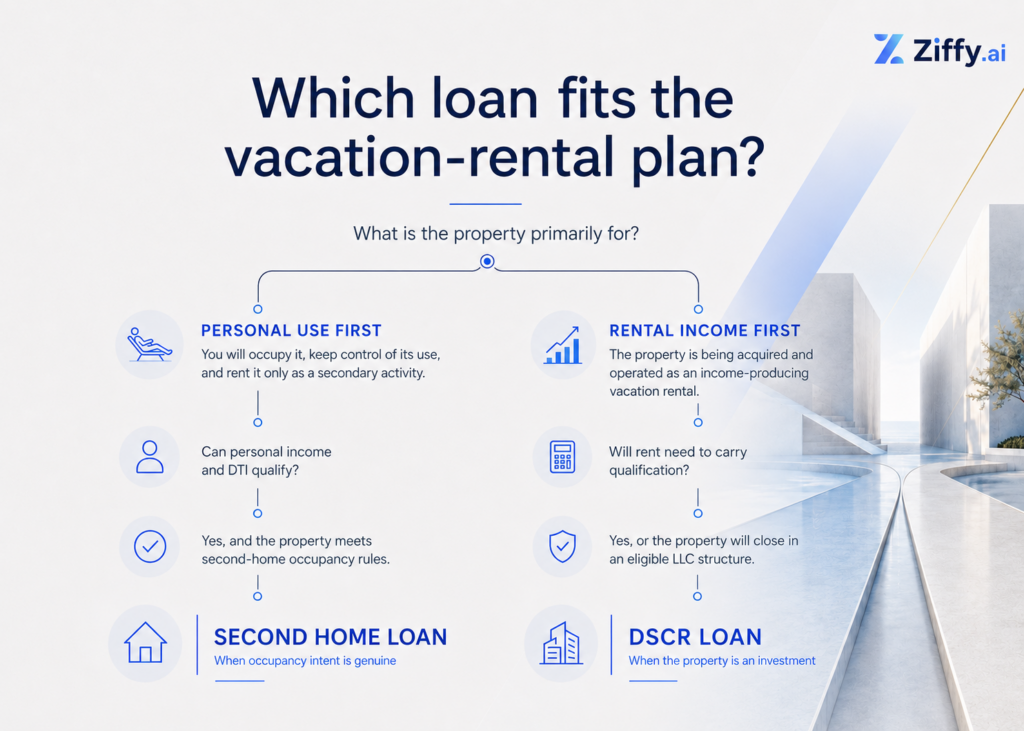
A second home loan may fit when personal use is the main reason for buying the property, the borrower will occupy it during the year, and personal income can support the mortgage without relying on future bookings.

A DSCR loan is usually the more suitable option when the property is being acquired primarily as a vacation rental, rent is needed for qualification, professional management is part of the plan, or an eligible limited liability company (LLC) will own the home.

For a closer look at rental-income qualification, underwriting, and available program structures, read Ziffy’s complete DSCR loan guide.
Table of Contents
DSCR Loan vs Second Home Loan
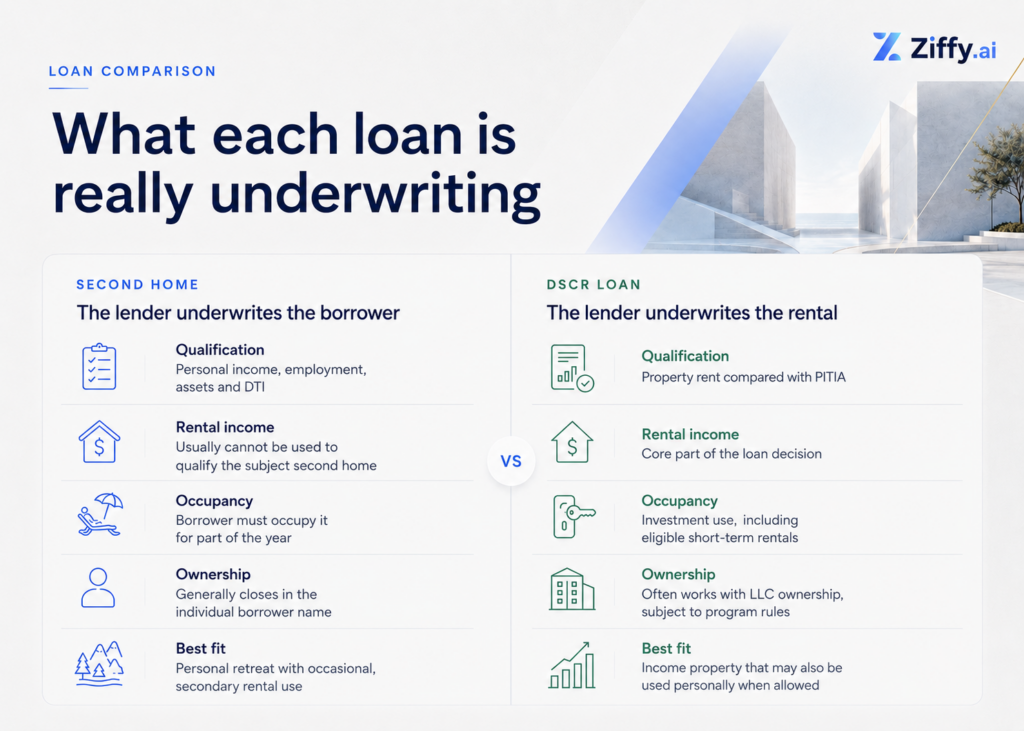
Feature | Second home loan | DSCR loan |
|---|---|---|
Primary purpose | Personal vacation use | Income-producing investment |
Qualification basis | Personal income, credit, assets, employment, and debt-to-income ratio | Property rent compared with PITIA |
Subject-property rent used to qualify | Generally no | Yes |
Occupancy | Borrower occupies the home during part of the year | Non-owner-occupied investment property |
Ownership | Usually an individual borrower | Individual or eligible LLC |
Property management | Borrower must retain control over occupancy | Professional management may be allowed |
Maximum purchase LTV | Up to 90% for an eligible one-unit second home | Up to 85% for an eligible Ziffy DSCR purchase |
Best fit | Personal retreat with secondary rental use | Vacation rental purchased mainly for income |
PITIA means principal, interest, property taxes, insurance, and association dues when applicable.
The April 2026 Fannie Mae Eligibility Matrix permits up to 90% loan-to-value ratio (LTV) for an eligible one-unit second home purchase. The maximum does not guarantee approval, and property, borrower, credit, reserve, and project requirements still apply.
A Second Home Loan Starts with Personal Occupancy
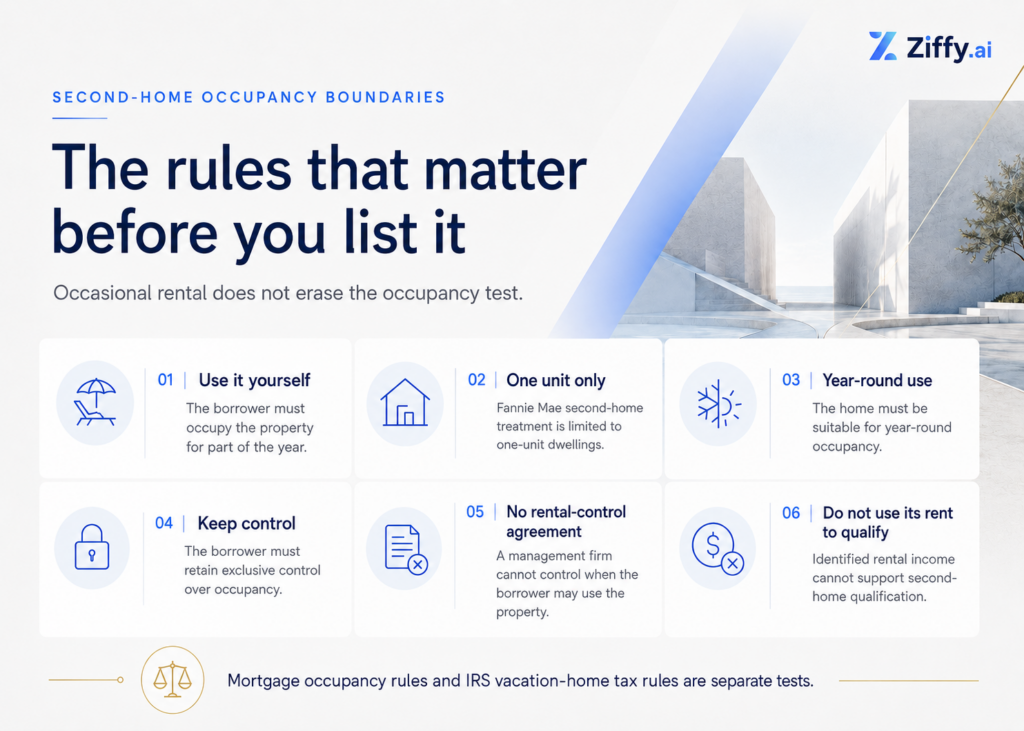
Under Fannie Mae’s second home requirements, the borrower must occupy the property during some part of the year. The home must be a one-unit dwelling, remain suitable for year-round use, and stay under the borrower’s exclusive control.
It cannot be a timeshare or a property operated primarily as a rental. An agreement that allows a management company to control when the borrower may use the property can also make the transaction ineligible.
Fannie Mae allows a lender to identify rental income associated with a second home, but that income cannot be used to qualify the borrower. The mortgage must be supported by the borrower’s eligible personal income, assets, credit profile, and existing debt obligations.
What we see often is buyers focusing on how many nights they plan to rent the property. Fannie Mae does not provide a universal night limit that separates a second home from an investment property. The broader facts matter: why the property is being purchased, how it will operate, who controls occupancy, and whether the borrower genuinely intends to use it.
Resort and condominium properties may require closer review. Hotel-style services, mandatory rental programs, short-term occupancy arrangements, and restrictions on owner use can raise project-eligibility concerns even when the borrower plans to visit regularly. Fannie Mae addresses these characteristics in its guidance on ineligible condominium projects.

Steven Glick
Director of Mortgage Sales · Ziffy Mortgage
The occupancy question should be settled before the borrower compares rates. When the purchase depends on bookings, professional management, or year-round rental availability, calling it a second home can create a mismatch between the application and the way the property will actually operate.
How Does A DSCR Loan Work?
A DSCR loan compares the property’s qualifying monthly rent with its monthly housing obligation.
DSCR = Gross monthly rent ÷ PITIA
A ratio of 1.00 means the qualifying rent equals PITIA. For example, a property with $3,000 in monthly rent and $2,500 in PITIA has a DSCR of 1.20.
The distinction here is that DSCR measures rent coverage, not the investor’s actual profit margin. It answers whether the qualifying rent supports the proposed mortgage payment under the lender’s formula.
Ziffy’s DSCR program may offer up to 85% purchase LTV on eligible transactions. Credit, reserves, property type, appraisal, rent documentation, insurance, loan amount, ownership structure, and the complete file still influence the terms available to an investor.
DSCR underwriting does not use personal debt-to-income ratio as the main qualification method. This can help self-employed investors, portfolio owners, and borrowers whose tax returns do not fully reflect the strength of their rental activity.
In our experience, the cleanest DSCR files are the ones in which the investor has already reviewed the expected rent, taxes, insurance, association dues, cash needed at closing, and funds remaining after the purchase. A strong rent estimate alone does not correct an incomplete financing plan.

A DSCR loan does not make the property analysis simpler. It changes what underwriting focuses on. We still need supportable rent, current taxes and insurance, sufficient reserves, and a loan structure that works at the accepted rent figure rather than the most optimistic projection.
Rental Income is Treated Differently Under Each Option
With a second home loan, the borrower generally qualifies without rent from the subject property. With a DSCR loan, supported property rent is central to the decision. Depending on the program and transaction, the qualifying figure may come from an appraisal rent schedule, an existing lease, approved short-term rental history, or another accepted source.
This is where it gets nuanced for vacation rentals. A nightly-rate estimate can look strong while annual performance remains uncertain. Seasonality, local demand, management, cleaning, platform charges, utilities, maintenance, furnishing replacement, and vacancy all affect the investment.
Ziffy’s Airbnb and short-term rental calculator helps investors model the operating side of the property. The DSCR loan calculator tests how rent compares with the proposed PITIA. These tools answer related but separate questions: whether the property may qualify for financing and whether its projected performance supports the investor’s goals.
Down Payment is Only One Part of the Cash Decision
A qualifying second home purchase may allow up to 90% LTV, while an eligible Ziffy DSCR purchase may reach 85% LTV.
The smaller down payment can look like the obvious advantage. It may also leave the borrower with mortgage insurance, different pricing, or a loan structure that does not match the intended rental use.
What we see often is investors treating the smaller down payment as the win without pricing in the cash a vacation rental needs on day one. Furniture, permits, repairs, deposits, insurance premiums, photography, utilities, supplies, and slower booking periods can quickly use the funds left after closing.
Steven Glick
Director of Mortgage Sales · Ziffy Mortgage
Maximum leverage is not always the strongest option for a vacation rental. A smaller down payment may preserve cash, but the investor still needs enough liquidity for furnishing, repairs, permits, insurance, and slower booking periods. The financing has to work after closing, not only on closing day.
One downside to consider with a larger down payment is the amount of investor capital tied up in a single property. More equity may improve DSCR by reducing principal and interest, but it should not leave the owner without enough liquidity to operate the rental or handle unexpected costs.
The useful comparison is not simply 10% versus 15% down. It is the complete cash requirement and the amount still available after the property is ready for guests.
Ownership and Management Can Decide the Loan Before Pricing Does
A conventional second home mortgage is generally structured with an individual borrower. A DSCR loan may allow an eligible LLC, subject to the lender’s entity, guaranty, title, and state requirements.
Investors planning to purchase through an LLC should confirm the contract and title structure before making an offer. Moving a transaction from an individual name to an entity later can create additional documentation and closing delays.
Management arrangements need the same early review. A borrower using second home financing must retain control over occupancy. An income-first vacation rental with a professional manager controlling the calendar is more naturally evaluated as an investment property.
Find, Analyze, and Finance Vacation Rentals Through Ziffy
Ziffy connects the property search with the financing decision. Investors can browse short-term rental properties for sale and review listings selected for vacation-rental strategies. The wider Ziffy investment property marketplace also includes buy-and-hold, high-cash-flow, and high-return opportunities.
A practical Ziffy workflow is:
- Find properties that match the intended investment strategy.
- Review projected rent, taxes, insurance, association dues, cash flow, and return metrics.
- Test the property using the short-term rental and DSCR calculators.
- Verify local regulations, association rules, insurance coverage, and permitted property use.
- Discuss the loan structure once the purchase assumptions are realistic.
Listing estimates help investors screen opportunities. The appraisal, accepted rent documentation, insurance quote, property taxes, and complete underwriting review determine the final loan terms.
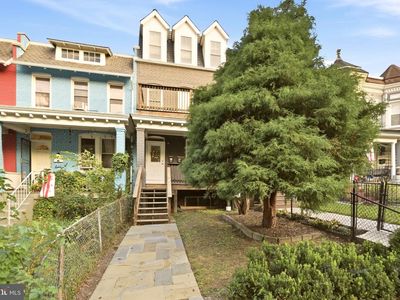
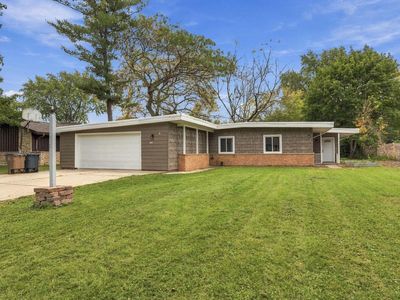
Investment Properties on Sale Today


The cleanest files are usually the ones where the investor has already separated three questions: Can the property qualify for the loan, can the rental operate legally, and does the projected cash flow justify the purchase? A positive answer to one does not guarantee the other two.
Five Questions to Settle the Financing Choice
Before applying, answer these questions in writing:
- Would you still buy the property if it produced no rental income during the first year?
- Can your personal income support the payment without using rent from the home?
- Will the property remain available to guests for most of the year?
- Will you or a rental manager control the booking calendar?
- Will the property close in your individual name or through an LLC?
The answers give the loan officer a clearer picture than the label “vacation home.” They also reduce the risk of comparing loan offers that are based on different occupancy or ownership assumptions.
FAQs
Can I use a second home loan for an Airbnb?
Possibly. The property must genuinely function as a second home, the borrower must occupy it during part of the year, and the borrower must retain control over occupancy. Rent from the subject property generally cannot be used to qualify.
Can I use projected Airbnb income for a second home loan?
Generally no. Under Fannie Mae’s second home requirements, identified rental income cannot support the borrower’s qualification.
Can a DSCR loan finance a short-term rental?
Yes, when the property and transaction meet the lender’s short-term rental requirements. Rent documentation, appraisal, leverage, reserves, credit, insurance, property type, and local restrictions still receive review.
Can I purchase a vacation rental through an LLC?
An eligible LLC may be used with some DSCR loan structures, subject to the lender’s title, guaranty, entity, and state requirements. Conventional second home financing is generally made to an individual borrower.
Does the IRS 14-day rule determine which mortgage I should use?
No. The IRS vacation-property rules govern federal tax treatment based on rental and personal use. Mortgage occupancy is a separate determination made under the loan program’s requirements.
Does a 1.00 DSCR mean the property is profitable?
No. A 1.00 ratio means qualifying rent equals PITIA. Actual profit depends on operating expenses and income that may sit outside the lender’s DSCR calculation.