






Editorial Integrity
Making sound real estate investment decisions begins with reliable, data-driven insights. At Ziffy.ai, we offer an AI-native real estate investing, proprietary data-driven trend analysis, investment mortgage programs like DSCR loans, and a network of over 500 investor-friendly real estate agents to deliver the expertise needed for informed decisions. Our content is crafted by experienced real estate professionals and backed by real-time market data, ensuring you receive accurate and actionable information. Through a rigorous editorial process, we strive to empower your investment journey with trustworthy and up-to-date guidance.
A rental property can look profitable at first glance and still become a weak investment after the real numbers are verified. That is why due diligence matters before you make an offer.
The goal is not to prove that the property works. The goal is to test every assumption that could change the return, financing path, or risk after closing. Rent can come in lower than expected. Insurance can quote higher than the first estimate. Taxes can reset after purchase. HOA dues can weaken DSCR. A tenant lease can limit rent increases. A roof issue can change your reserves before the first tenant payment arrives.
At Ziffy, we look at due diligence through an investor-first lens. Ziffy is an AI-native real estate investing platform built for investors who want to find cash-flowing rentals, analyze ROI metrics, and finance rentals using the property’s income.
As of March 2026, Ziffy had 964,477 active US listings, a roughly 23.5% increase from the prior year. That gives investors a wider pool of rental opportunities to screen, but a larger inventory does not make due diligence optional. The first screen can help identify a potential deal. The checklist below helps decide whether that deal is strong enough to pursue.
This checklist shows what to verify before making an offer, how to stress-test the numbers, and where Ziffy’s property search, investment analysis, and DSCR loan workflow fit into the process.
Table of Contents
Quick Answer: What Should You Verify Before Making an Offer?
Before making an offer on an investment property, verify the property’s rent potential, DSCR, PITIA, taxes, insurance, HOA dues, repair needs, lease status, title issues, zoning, flood risk, local rental rules, financing eligibility, cash reserves, and exit strategy.
Due diligence item | What to verify | Why it matters |
|---|---|---|
Rent | Current rent, market rent, rent comps, lease status | Rent drives DSCR, cash flow, and ROI |
PITIA | Principal, interest, taxes, insurance, HOA dues | PITIA controls DSCR and monthly payment pressure |
DSCR | Gross monthly rent divided by PITIA | Shows whether rent supports the debt |
Taxes | Current bill, reassessment, exemptions | Seller’s tax bill may not be your future tax bill |
Insurance | Landlord policy, flood, roof, storm risk | Insurance can change PITIA and DSCR |
Repairs | Roof, HVAC, plumbing, electrical, safety | Repairs affect reserves, rent timing, and offer price |
Lease | Rent ledger, deposit, lease term, tenant status | You inherit the tenant situation after closing |
HOA | Rental caps, dues, lease rules, litigation | HOA rules can block or weaken the investment |
Title and legal use | Liens, permits, zoning, rental registration | Legal issues can delay or derail closing |
Reserves | Cash to close and post-closing liquidity | A good deal can fail if you are undercapitalized |
Exit strategy | Hold, BRRRR, STR, flip, refinance, resale | The offer price should match the plan |
In our experience, the deals that slow down are not always the ones with weak rent. More often, one cost line was not checked early enough. Insurance comes in higher. Taxes reset. HOA dues were left out of PITIA. The lease does not support the rent assumption.
That is why due diligence should happen before the offer, not after the investor is already attached to the property.
How Ziffy Fits Into Pre-Offer Due Diligence
A stronger due diligence process starts before the inspection.
Use Ziffy to move through the early investor workflow:
- Search investment properties on Ziffy listings
- Review projected rent, ROI, cash flow, and DSCR visibility
- Compare the property against your investment strategy
- Stress-test rent, PITIA, taxes, insurance, and HOA dues
- Confirm whether the property fits a DSCR loan path
- Get pre-qualified before writing a serious offer
- Use due diligence to decide whether to offer, renegotiate, or walk away
That workflow matters because investment property due diligence should not sit in separate silos. Rent affects DSCR. DSCR affects financing. Financing affects cash needed to close. Repairs affect reserves. Taxes and insurance affect PITIA. The offer price should reflect all of it.
For deeper analysis during the pre-offer stage, investors can also use Ziffy’s Deal Score Calculator and Cap Rate Calculator to compare return strength before moving forward.
1. Verify the Rent Before You Trust the Cash Flow
Rent is the first number to verify because it drives cash flow, DSCR, ROI, and financing confidence. Check four rent numbers before making an offer:
Rent number | What it means |
|---|---|
Current rent | What the tenant pays now |
Market rent | What similar rentals support |
Appraiser-supported rent | What the rent schedule or appraisal may support |
Conservative rent | A lower number used for stress testing |
What most guides do not mention is that rent is not one fixed number. It is a range. If the deal only works at the highest possible rent, it is not a strong deal. It is a fragile deal.
Before making an offer, verify:
- Current lease rent
- Rent ledger
- Nearby rental comps
- Active competing rentals
- Recently leased comps where available
- Concessions in the market
- Vacancy risk
- Whether the property condition supports the assumed rent
The US Census Bureau reported that the national rental vacancy rate was 7.3% in Q1 2026, statistically similar to 7.1% in Q1 2025 and 7.2% in Q4 2025. That does not replace local rent diligence, but it reinforces why vacancy and tenant demand should be part of the offer analysis.

Dorian Adams-Walker,
Mortgage Loan Originator, NMLS #2442830
2. Rebuild PITIA, Not Just the Mortgage Payment
Do not analyze an investment property using only principal and interest.
For rental property financing, the more useful payment number is PITIA:
- Principal
- Interest
- Taxes
- Insurance
- Association dues, if applicable
Technically speaking, DSCR is not calculated from the mortgage payment alone. It is calculated by dividing gross monthly rent by monthly PITIA. That means taxes, insurance, and HOA dues can change the loan picture.
PITIA component | What to verify |
|---|---|
Principal and interest | Investor mortgage quote, not a primary residence calculator |
Taxes | Current bill, exemptions, reassessment risk |
Insurance | Landlord policy quote, roof age, hazard risk |
HOA dues | Monthly dues, rental restrictions, assessments |
Escrows | Whether taxes and insurance will be escrowed |
A DSCR loan qualifies primarily based on the property’s rental income, not the borrower’s personal DTI. That makes PITIA one of the most important pre-offer numbers.

Lucas Hernandez
Mortgage Loan Originator, NMLS #2171747
3. Calculate DSCR Before Making the Offer
If you plan to use a DSCR loan, calculate DSCR before making the offer.
DSCR = Gross Monthly Rent ÷ Monthly PITIA
Example:
Monthly rent | Monthly PITIA | DSCR |
|---|---|---|
$2,500 | $2,250 | 1.11 |
$2,500 | $2,500 | 1.00 |
$2,500 | $2,750 | 0.91 |
A DSCR of 1.00 means the property’s gross monthly rent equals the monthly PITIA. A DSCR above 1.00 means the property covers the debt on paper. A DSCR below 1.00 means rent does not fully cover PITIA.
At Ziffy Mortgage, DSCR at or above 1.00 generally creates the cleanest path on a standard DSCR file. Eligible lower-ratio files may still be reviewed through Ziffy’s No-Ratio DSCR option, but pricing, leverage, reserves, property type, and file strength matter.
Use Ziffy’s DSCR loan requirements guide to verify credit score, down payment, reserve, LTV, property eligibility, and loan amount expectations before writing a serious offer.
DSCR Sensitivity Table
Use this table to show how one cost change can reshape the deal.
Scenario | Monthly rent | PITIA | DSCR | What changed |
|---|---|---|---|---|
Initial screen | $2,400 | $2,200 | 1.09 | Deal appears to cover debt |
Insurance quote higher | $2,400 | $2,350 | 1.02 | Still workable, but tighter |
Taxes reassess higher | $2,400 | $2,500 | 0.96 | Standard DSCR path weakens |
Appraiser rent lower | $2,250 | $2,500 | 0.90 | Needs price adjustment, stronger reserves, or No-Ratio review |
HOA dues added | $2,250 | $2,625 | 0.86 | Offer price or loan path needs another review |
A pattern we have noticed is that investors often focus on the rent number first, but the deal usually tightens because of the denominator. Insurance, taxes, and HOA dues can shift DSCR even when the rent estimate stays the same.
Dorian Adams-Walker,
Mortgage Loan Originator, NMLS #2442830
4. Check Property Taxes and Reassessment Risk
The seller’s current tax bill may not be your future tax bill. Before making an offer, verify:
- Current annual tax bill
- Assessed value
- Tax rate
- Homestead or owner-occupant exemptions
- Reassessment rules after sale
- Special assessments
- Municipal or school district charges
- Delinquent taxes
- Pending appeals
One thing that surprises investors is how quickly a tax reassessment can weaken DSCR. A property that clears 1.00 DSCR using the seller’s current tax bill may fall below 1.00 if the investor’s post-sale tax number is higher.
Use the likely investor tax number in your offer analysis, not the most favorable number available online.
Lucas Hernandez
Mortgage Loan Originator, NMLS #2171747
5. Get an Insurance Quote Early
Insurance should not be treated as a placeholder.
Before making an offer, send the property address to an insurance agent and ask for a landlord policy estimate. For higher-risk markets, do this before you spend too much time negotiating.
Check:
- Property age
- Roof age
- Electrical and plumbing condition
- Replacement cost
- Prior claims if available
- Flood zone
- Wind, hail, wildfire, hurricane, or storm exposure
- Rental use
- Short-term rental use, if applicable
- Whether repairs are needed before coverage can be bound
The FEMA Flood Map Service Center is the official public source for flood hazard information produced in support of the National Flood Insurance Program, and investors can use it to find official flood maps and other flood hazard products.
Insurance affects PITIA, which affects DSCR. A deal with $300 in projected monthly cash flow can look very different if the actual insurance quote is $150 to $250 higher than expected.

Steven Glick,
Director of Mortgage Sales, NMLS #1231769
6. Inspect the Property Like an Investor
A homebuyer may focus on comfort and taste. An investor should focus on rentability, financing, insurance, repair timing, and reserves.
Before making an offer, review:
- Roof
- HVAC
- Water heater
- Plumbing
- Electrical panel and wiring
- Foundation
- Drainage
- Windows
- Exterior condition
- Flooring
- Kitchen and baths
- Appliances
- Pest or termite signs
- Water intrusion
- Mold indicators
- Safety issues
- Permit or code concerns
Split repair costs into three groups:
Repair type | What it includes | Why it matters |
|---|---|---|
Immediate repairs | Safety, habitability, financing, or insurance issues | Can affect closing and loan confidence |
Rent-ready repairs | Paint, flooring, fixtures, appliances, cleaning | Affects tenant demand and rent timing |
CapEx | Roof, HVAC, plumbing, electrical, windows | Affects long-term return and reserves |
In our experience, investors often budget for visible repairs but miss near-term CapEx. A rental can cash flow on paper and still become a weak hold if the first year includes a roof or HVAC replacement that was not priced into the offer.
For older housing, lead-based paint disclosure also belongs in the due diligence file. The EPA’s real estate disclosure guidance states that the Lead-Based Paint Disclosure Rule requires sellers, landlords, agents, and property managers to provide specific information about known lead-based paint and lead-based paint hazards before most prospective buyers or renters sign a contract or lease for pre-1978 housing.
7. Review the Lease, Tenant, and Rent Ledger
If the property is tenant-occupied, you are not only buying the building. You are inheriting the lease situation.
Before making an offer, request:
- Current lease
- Lease start and end date
- Monthly rent
- Rent ledger
- Security deposit amount
- Late payment history
- Renewal options
- Tenant-paid utilities
- Owner-paid utilities
- Pet agreements
- Notices or disputes
- Property management agreement
- Deposit transfer details at closing
A tenant-occupied property can be a strong buy if the rent is real, the tenant pays consistently, and the lease supports your investment plan. It can also become a problem if rent is below market, the tenant is behind, or the lease blocks near-term rent adjustments.
For DSCR review, current rent can matter, but appraiser-supported rent can still influence the file. If current rent is above market, do not assume the higher number will carry the analysis without support.
Steven Glick,
Director of Mortgage Sales, NMLS #1231769
8. Check HOA, Condo, and Short-Term Rental Rules
HOA and condo rules can make or break the deal.
Before making an offer, verify:
- Whether rentals are allowed
- Rental caps
- Lease minimums
- Waiting periods before renting
- Tenant approval requirements
- Monthly dues
- Special assessments
- Reserve health
- Litigation
- Master insurance coverage
- Parking rules
- Pet rules
HOA dues also affect PITIA. That means they affect DSCR. If HOA dues were not included in the first model, the analysis is incomplete.
If the strategy is short-term rental income, the due diligence bar is higher. Check local STR rules, permit availability, occupancy taxes, HOA restrictions, insurance coverage, furnishing costs, cleaning costs, seasonality, and management fees. Ziffy’s short-term rental guide and short-term rental markets guide are natural next reads for investors evaluating STR-specific rules and market selection.
Dorian Adams-Walker,
Mortgage Loan Originator, NMLS #2442830
9. Verify Title, Public Records, and Legal Use
Before making an offer, check public records for:
- Owner name
- Sale history
- Tax status
- Open permits
- Code violations
- Visible liens
- Easements
- Property boundaries
- Zoning
- Legal unit count
- Rental registration requirements
- Recorded restrictions
After contract acceptance, the title company or attorney should verify seller authority, liens, easements, unpaid taxes, legal description, and restrictions that could affect your intended use.
Do not assume the property is legally rentable because it is listed as an investment property. Verify zoning, rental registration, occupancy rules, local inspection requirements, and landlord licensing where applicable.
Landlords also need to understand fair housing obligations. HUD explains that the Fair Housing Act prohibits discrimination based on race, color, national origin, religion, sex, familial status, and disability. HUD also states that a person with a disability may request an assistance animal as a reasonable accommodation to a housing provider’s pet restrictions. Use HUD’s assistance animals guidance when building tenant policies.
10. Confirm Cash Reserves and Cash Needed to Close
Down payment is not the full cash requirement. Before making an offer, estimate:
- Down payment
- Closing costs
- Lender fees
- Discount points, if applicable
- Appraisal fee
- Title and escrow charges
- Recording fees
- Transfer taxes
- Prepaid taxes
- Prepaid insurance
- Initial escrow deposit
- HOA transfer fees
- Inspection costs
- Repair reserves
- Vacancy reserves
- Post-closing operating reserves
Ziffy’s cash reserves for investment loans guide should be used here because reserves affect both investor confidence and loan strength. Ziffy’s current DSCR baseline generally starts with 2 months of reserves, subject to file strength, property type, leverage, credit profile, and current program guidelines.
The CFPB provides Loan Estimate and Closing Disclosure model forms and samples that help borrowers review loan terms and closing costs. Investors should compare the Loan Estimate with the final Closing Disclosure and confirm cash to close before removing financing-related protections.
To be clear, a DSCR loan is not the right answer for every property. If the rent cannot support the debt, insurance materially changes PITIA, the property has unresolved condition issues, or the investor does not have enough post-closing reserves, the better move may be to renegotiate, change structure, or walk away.
11. Match the Offer to the Exit Strategy
The offer price should come from the property’s verified performance, not the seller’s asking price. Before making an offer, match the property to the exit:
Exit strategy | What to verify | Ziffy financing angle |
|---|---|---|
Long-term rental | Rent, PITIA, DSCR, taxes, insurance, repairs | DSCR loan is usually the best-fit path |
Purchase price, rehab budget, ARV, stabilized rent | Bridge or renovation financing first, then DSCR refinance | |
Short-term rental | STR rules, revenue, furnishing cost, insurance | DSCR may work if income and eligibility support it |
Fix and flip | ARV, repair scope, resale comps, holding costs | Bridge or fix-and-flip financing may fit better |
Cash-out refinance later | Future value, rent, DSCR, equity position | DSCR cash-out path depends on rent, value, and eligibility |
For return analysis, use Ziffy’s cash-on-cash return guide to understand how much annual pre-tax cash flow the investor receives relative to cash invested.
Tax planning should also be reviewed early. IRS Publication 527 discusses rental income and expenses, including depreciation, and also covers casualty losses, passive activity rules, and at-risk rules. Investors can use Ziffy’s real estate taxes guide for broader tax planning context. If a 1031 exchange is part of the strategy, review Ziffy’s 1031 exchange rules guide before the sale and replacement-property process begins.
Dorian Adams-Walker,
Mortgage Loan Originator, NMLS #2442830
Live Ziffy Listing Walkthrough: How to Turn a First Screen Into Due Diligence
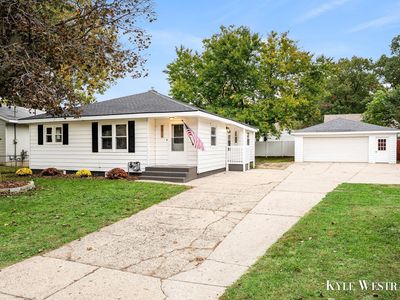
To show how this works in practice, let’s look at a Ziffy listing for 576 Van Allen St SE, Wyoming, MI 49548. The property is a good example of why investors should use listing-level metrics as a starting point, not the final decision.
As of May 2026, the listing showed a price of $256,000, with $1,871/month in estimated rent, $295/month in estimated net cash flow, a 9.39% yield, and a 1.63 DSCR. On the surface, those numbers suggest a property worth reviewing further. The next step is to verify whether the rent, PITIA, taxes, insurance, condition, and lease details support the same conclusion.
- Listing Price: $256,000
- Estimated Rent: $1,871/month
- Estimated Monthly Cash Flow: $295/month
- Gross Yield: 9.39%
- DSCR: 1.63
- Market, Wyoming, MI
- Property Address: 576 Van Allen St SE, Wyoming, MI
This is a useful first screen. The rent-to-price relationship is strong, the DSCR appears to clear the standard 1.00 threshold, and the property shows positive projected monthly cash flow.
But before making an offer, the investor should still verify:
First-screen strength | What still needs due diligence |
|---|---|
$1,871/month projected rent | Lease, rent comps, appraiser-supported rent |
1.63 DSCR | Final PITIA using actual insurance, taxes, and loan terms |
$295/month projected cash flow | Vacancy, repairs, CapEx, management, and reserves |
9.39% yield | Whether rent is sustainable for the location and condition |
Positive financing fit | Property condition, appraisal, title, insurance, and borrower/file eligibility |
A Ziffy listing helps identify the opportunity faster. Due diligence decides whether that opportunity deserves an offer.
Investment Properties on Sale in Wyoming Today




Red Flags That Should Slow Down the Offer
Be careful if you see:
- Rent assumptions far above local comps
- No strong rent comps
- High insurance uncertainty
- Old roof in a difficult insurance market
- Tax bill that appears unusually low
- HOA dues missing from PITIA
- HOA rental caps
- STR income used without STR legality
- Tenant-occupied property with no rent ledger
- Lease below market with a long remaining term
- Seller unwilling to provide lease documents
- Open permits
- Code violations
- Unpermitted additions
- Flood risk with no insurance quote
- Major repairs with no contractor estimate
- Property condition that may affect financing or insurance
- Deal only works with maximum rent and minimum expenses
In our experience, the red flag is not always one major issue. It is often the stack of smaller misses: rent slightly high, insurance slightly low, taxes not reassessed, and repairs undercounted. When all of those move in the wrong direction, the deal can change quickly.
Walking away is not failure. Walking away before a weak offer becomes an expensive contract is disciplined investing.
Final Takeaway
Investment property due diligence is how investors protect the return before the offer becomes a contract.
Start with the strategy. Verify rent. Rebuild PITIA. Calculate DSCR. Quote insurance. Review taxes. Check repairs. Read the lease. Confirm HOA rules. Review title and legal use. Estimate cash to close. Confirm reserves. Match the property to the exit strategy.
Ziffy gives investors a faster way to find and analyze rental opportunities, but the strongest investors still verify the deal before they commit. The goal is not to make every property work. The goal is to identify the properties where the numbers, financing, and risk profile still hold up after the assumptions are tested.
FAQs
What is due diligence on an investment property?
Investment property due diligence is the process of verifying rent, expenses, DSCR, PITIA, taxes, insurance, property condition, leases, title, HOA rules, local rental laws, financing, reserves, and exit strategy before committing to the purchase.
What should I verify before making an offer on a rental property?
Before making an offer, verify market rent, lease status, rent ledger, DSCR, PITIA, taxes, insurance, HOA dues, repairs, title issues, local rental rules, flood risk, cash reserves, and loan eligibility.
Should I calculate DSCR before making an offer?
Yes. If you plan to use a DSCR loan, calculate DSCR before making the offer. DSCR is gross monthly rent divided by monthly PITIA. PITIA includes principal, interest, taxes, insurance, and HOA dues when applicable.
How does Ziffy help with investment property due diligence?
Ziffy helps investors find investment properties, review projected rent, cash flow, ROI, and DSCR visibility, then connect the deal analysis to investor-friendly financing. Investors can use Ziffy for the first screen, then verify rent, taxes, insurance, repairs, leases, and financing before making an offer.
What is the biggest due diligence mistake investors make?
The biggest mistake is stacking optimistic assumptions. High rent, low insurance, low taxes, low vacancy, low repairs, and easy financing rarely all happen at the same time. A stronger offer should still make sense when one or two assumptions move against the investor.
Can a property with DSCR below 1.00 still work?
Possibly. Eligible files below 1.00 may still be reviewed through Ziffy Mortgage’s No-Ratio DSCR option. However, a lower DSCR should be supported by strong reserves, a clear strategy, and realistic expectations. Investors should not use No-Ratio DSCR to ignore weak deal fundamentals.