





Editorial Integrity
Making sound real estate investment decisions begins with reliable, data-driven insights. At Ziffy.ai, we offer an AI-native real estate investing, proprietary data-driven trend analysis, investment mortgage programs like DSCR loans, and a network of over 500 investor-friendly real estate agents to deliver the expertise needed for informed decisions. Our content is crafted by experienced real estate professionals and backed by real-time market data, ensuring you receive accurate and actionable information. Through a rigorous editorial process, we strive to empower your investment journey with trustworthy and up-to-date guidance.
Most best-places-to-invest lists rank cities by one or two metrics, usually home price growth, median price, or cap rate. That gives investors a starting point, but it does not answer the question that matters most in 2026:
Can the property actually cash-flow after financing?
That question matters more now because the financing environment has changed. As of April 23, 2026, Freddie Mac reported that the 30-year fixed-rate mortgage averaged 6.23%, down from 6.30% the previous week but still high enough to keep deal math tight for rental investors.
At Ziffy, we look at markets through a financing-first lens. A city can look exciting on a population chart and still produce weak DSCR numbers if home prices have moved faster than rents. A lower-priced market can look attractive on paper and still be difficult if the housing stock is older, operating expenses are unpredictable, or the local landlord environment creates income interruptions.
In our investor-lending work, Midwest and Sun Belt markets come up repeatedly because the rent-to-price relationship is often more workable than in many higher-priced coastal metros. That does not mean every property in these regions qualifies easily. It means these markets tend to give investors more room to make the DSCR math work when the purchase price, rent, taxes, insurance, and down payment are aligned.
This guide ranks the best places to invest in real estate in 2026 based on the numbers that matter for rental investors: rent-to-price strength, cash-flow potential, landlord-friendliness, DSCR achievability, and the type of investor each market actually suits.
Table of Contents
How We Chose the Best Real Estate Investment Markets for 2026
This ranking uses a blended framework rather than a pure cap-rate list. The markets below were evaluated using estimated gross yield, price-to-rent strength, median home value and rent baseline, population and employment stability, landlord-law environment, DSCR achievability at 20% to 25% down, property management feasibility for out-of-state investors, and Ziffy market coverage.
For public baseline data, we referenced US Census Bureau QuickFacts for median owner-occupied home values and median gross rents across the selected cities. Census data is useful because it gives each market a consistent housing baseline before investor-specific underwriting begins. Columbus, Indianapolis, Cleveland, Jacksonville, and Pittsburgh all show meaningfully different rent-to-value relationships, which helps explain why some markets screen better for rental-income-based financing than others.
The Ziffy lens adds the financing layer. We are not just asking, “Where are rents high?” We are asking, “Where can an investor buy a real property, finance it with a DSCR loan, and still have a credible path to rental income covering PITIA?”
PITIA means principal, interest, taxes, insurance, and association dues. For DSCR underwriting, that number matters because the property’s rental income is compared against the full monthly housing payment.
What most market guides do not show is how quickly the market-level numbers turn into lender qualification math. Take a sample underwriting scenario: a $265,000 rental property with 25% down creates a loan amount of $198,750. If the monthly PITIA is about $1,760 and the appraiser-supported market rent is $1,900, the DSCR is about 1.08.
That difference matters. A market with stronger rent-to-price fundamentals gives the same investor more room to qualify without forcing a larger down payment. A higher-priced market with similar rent can push the DSCR below 1.0, even if the city looks attractive on a population-growth chart.
Ziffy’s DSCR loan path is built for rental investors because qualification focuses on property income instead of W-2s, pay stubs, tax returns, or personal DTI. Investors can use the DSCR loan calculator early in the search process to test whether a specific property has enough rent support before moving deeper into underwriting.
The markets on this list also align with the types of rental deals investors actively screen on Ziffy: affordable single-family rentals, small multifamily properties, and long-term rental opportunities where income can support the financing structure. Instead of ranking cities by popularity alone, this guide focuses on markets where the property-level math has a realistic chance of working.
Rates, terms, and calculations shown in this article are for illustrative and educational purposes only. Actual rates depend on your specific scenario, property type, borrower profile, market, and loan program. Rates and market conditions are subject to change without notice. Ziffy Mortgage, NMLS #2625701, is a licensed mortgage company. Loans made or arranged pursuant to applicable state law. This article does not constitute legal, tax, or financial advice.
2026 Market Snapshot: Quick Comparison
Market | Estimated Investor Price Band | Estimated Gross Yield | Price-to-Rent Strength | Best For | DSCR Fit |
|---|---|---|---|---|---|
$240K to $290K | 6.5% to 7.5% | Strong | LTR, buy and hold | Strong | |
$225K to $275K | 7% to 8% | Strong | LTR, SFR portfolios | Strong | |
$140K to $210K | 8% to 10% | Very strong | High-yield LTR | Strong, with condition review | |
$160K to $225K | 8% to 9.5% | Very strong | Cash-flow rentals | Strong, neighborhood-sensitive | |
$225K to $285K | 6.75% to 7.75% | Strong | LTR, small multifamily | Strong | |
$260K to $330K | 6.25% to 7.25% | Moderate to strong | LTR, Sun Belt exposure | Good | |
$150K to $220K | 8% to 9.5% | Very strong | LTR, lower capital entry | Strong | |
$240K to $315K | 6.25% to 7.25% | Moderate | Growth-oriented buy and hold | Good, price-sensitive | |
$260K to $330K | 6% to 7% | Moderate | LTR, military-market exposure | Good, property-sensitive | |
$185K to $250K | 7% to 8% | Strong | Stable LTR | Strong |
1. Columbus, OH
- Estimated investor price band: $240,000 to $290,000
- Estimated gross yield: 6.5% to 7.5%
- Price-to-rent strength: Strong
- Best for: Long-term rentals, buy-and-hold investors, first-time out-of-state buyers
Columbus has become one of the most consistent Midwest markets for rental investors. It does not depend on one story. The city has a large university base, a diversified employment market, logistics demand, healthcare employment, and continued corporate investment across the broader metro.
The reason Columbus belongs near the top of this list is not that it produces the highest raw yield. It usually does not. Its strength is balance. The market still offers entry prices that can work for rental investors, while rent demand is supported by a broad tenant base rather than a single industry.
Census data for Columbus shows a median owner-occupied home value of $252,900 and median gross rent of $1,295 for 2020 to 2024. That baseline helps explain why the city remains workable for investors who need the rent-to-price relationship to make sense before financing.
What we see often with Columbus investors is that the best deals are not necessarily the cheapest homes. Better execution usually comes from buying in neighborhoods where tenant demand, property condition, and rent comps are easier to verify. For DSCR borrowers, that matters because the appraisal rent schedule can determine whether the file clears comfortably or needs a larger down payment.
For investors comparing Midwest rental markets, Columbus is a strong first-market choice because it offers cash-flow potential without the same management intensity that can come with more distressed high-yield markets.
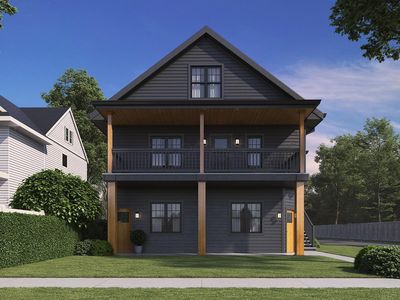
Investment Properties on Sale in Columbus


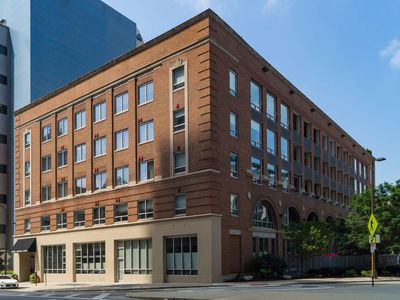
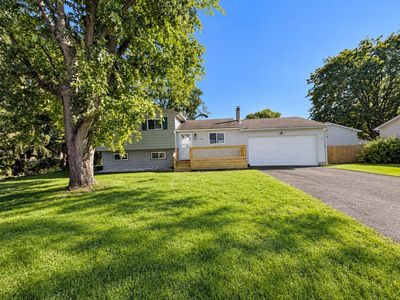
2. Indianapolis, IN
- Estimated investor price band: $225,000 to $275,000
- Estimated gross yield: 7% to 8%
- Price-to-rent strength: Strong
- Best for: Long-term rentals, single-family rentals, out-of-state investors
Indianapolis remains one of the cleanest rental-investor markets in the Midwest because the numbers are simple to understand. Prices are still approachable, rents are deep enough to support financing, and the state’s landlord environment is generally favorable for rental-property owners.
Census QuickFacts for Indianapolis shows a median owner-occupied home value of $224,800 and median gross rent of $1,156 for 2020 to 2024. That combination gives investors a more workable starting point than many coastal or high-growth Sun Belt markets where prices have pulled too far ahead of rent.
The distinction here is market depth. Indianapolis gives investors several workable submarket profiles. Some areas support stable, lower-volatility long-term rentals. Others offer more yield but require stronger property management and tighter expense assumptions. That flexibility is useful for investors building a portfolio over multiple acquisitions.
For DSCR financing, Indianapolis works because many properties still have a credible path to rent covering PITIA at 20% to 25% down. The best files are usually not built around optimistic rent estimates. They are built around clean leases, realistic insurance and tax assumptions, and appraisal-supported market rent.
Indianapolis is one of the best markets for investors who want a practical, repeatable single-family rental strategy and plan to scale with a buy-and-hold real estate strategy.
Investment Properties on Sale in Indianapolis
3. Cleveland, OH
- Estimated investor price band: $140,000 to $210,000
- Estimated gross yield: 8% to 10%
- Price-to-rent strength: Very strong
- Best for: High-yield long-term rentals, portfolio-building at lower capital entry
Cleveland is a high-yield market that rewards careful underwriting. The entry price is one of its biggest advantages. Census data for Cleveland shows a median owner-occupied home value of $102,000 and median gross rent of $945 for 2020 to 2024. That rent-to-value relationship is why Cleveland keeps showing up in cash-flow screens.
The trade-off is property condition. Cleveland has older housing stock, and repair variability can be wide from one block to another. Investors who underwrite only the rent and purchase price can get burned by deferred maintenance, tax reassessments, insurance costs, or weak property management.
Here’s what actually happens in stronger Cleveland deals: the investor buys below the national median price, keeps leverage manageable, verifies rent through actual comps, and budgets more conservatively for maintenance. That is how the high-yield profile turns into a financeable DSCR file instead of a paper return.

Steven Glick,
Director of Mortgage Sales, NMLS #1231769
Cleveland is a strong fit for investors who want higher cash flow and are willing to be more disciplined on inspections, repairs, and property management.
Investment Properties on Sale in Cleveland
4. Memphis, TN
- Estimated investor price band: $160,000 to $225,000
- Estimated gross yield: 8% to 9.5%
- Price-to-rent strength: Very strong
- Best for: High-yield long-term rentals, experienced SFR investors
Memphis is one of the strongest rent-to-price markets in the country for rental investors, but it is not a market where investors should buy casually. The opportunity is real. So is the submarket risk.
Census data for Memphis shows a median owner-occupied home value of $169,000 and median gross rent of $1,181 for 2020 to 2024. That baseline gives investors a clear reason to study the market, especially if the strategy depends on current cash flow rather than only future appreciation.
The market’s performance depends heavily on neighborhood selection. Two properties with similar purchase prices can produce very different outcomes if one has stronger tenant demand, cleaner rent comps, lower turnover risk, and better management coverage.
For DSCR borrowers, the biggest mistake is using a generic rent estimate. A rent figure pulled from a listing site is not enough. The deal should be tested using realistic market rent, property taxes, insurance, and maintenance expectations before the offer is made.
Memphis belongs on the list because the cash-flow potential is strong, but it is better suited for investors who can evaluate submarkets carefully or work with a strong local operator. For DSCR borrowers, the safest approach is to test individual properties before assuming the market’s average yield will carry the deal.
Investment Properties on Sale in Memphis
5. Kansas City, MO
- Estimated investor price band: $225,000 to $285,000
- Estimated gross yield: 6.75% to 7.75%
- Price-to-rent strength: Strong
- Best for: Long-term rentals, small multifamily, buy and hold
Kansas City does not always get the attention of Indianapolis or Columbus, but its fundamentals are strong for investors who want a balanced Midwest market. It offers affordable entry compared with many large metros, a broad employment base, and a rental market that works for both single-family and small multifamily strategies.
Census data for Kansas City shows a median owner-occupied home value of $242,900 and median gross rent of $1,238 for 2020 to 2024. That baseline puts the city in a workable range for investors looking at rent-to-price performance.
A pattern we have noticed with Kansas City is that small multifamily can be especially interesting. Duplexes, triplexes, and four-plexes in the right areas can outperform single-family homes on rent per dollar of purchase price, which helps the DSCR calculation.
Ziffy’s DSCR loan covers 1 to 4 unit investment properties, which makes Kansas City a practical market for investors who want to scale beyond one single-family rental without jumping into commercial financing.
Kansas City is a strong fit for investors who want Midwest stability with the option to build a small multifamily portfolio.
Investment Properties on Sale in Kansas City
6. Jacksonville, FL
- Estimated investor price band: $260,000 to $330,000
- Estimated gross yield: 6.25% to 7.25%
- Price-to-rent strength: Moderate to strong
- Best for: Long-term rentals, Sun Belt diversification, military-tenant demand
Jacksonville earns its place because it is one of the Florida markets where long-term rental math still has room to work. That is not true across the entire state. In many Florida metros, prices moved so quickly that rents now struggle to support DSCR financing unless the investor brings a larger down payment.
Census data for Jacksonville shows a median owner-occupied home value of $293,700 and median gross rent of $1,465 for 2020 to 2024. Those numbers explain why Jacksonville can still work for investors who want Florida exposure without chasing the most expensive coastal markets.
The rental demand story is also stronger than a basic rent chart shows. Jacksonville has healthcare, logistics, military, port-related employment, and population growth across the broader Northeast Florida region. For buy-and-hold investors, that diversity matters because stable tenant demand protects the income side of the deal.

Lucas Hernandez
Mortgage Loan Originator, NMLS #2171747
Jacksonville is best for investors who want Florida exposure but still care about rent coverage, not just appreciation. Check the investment properties on sale in Jacksonville.
7. Birmingham, AL
- Estimated investor price band: $150,000 to $220,000
- Estimated gross yield: 8% to 9.5%
- Price-to-rent strength: Very strong
- Best for: Long-term rentals, emerging-market exposure, lower capital entry
Birmingham is one of the more compelling lower-entry markets for rental investors in 2026. It has affordable prices, strong rent-to-price potential, and a local economy anchored by healthcare, education, finance, and distribution.
Census data for Birmingham shows a median owner-occupied home value of $158,800 and median gross rent of $1,107 for 2020 to 2024. That relationship is exactly why the city screens well for investors looking for cash flow rather than just long-term appreciation.
The reason this matters is simple: lower purchase prices reduce the upfront capital required for a 20% to 25% down payment. That gives Birmingham an advantage for investors who want to start or expand a portfolio without tying up too much capital in one asset.
Birmingham is not as plug-and-play as a more institutionalized market. Investors still need to underwrite neighborhood quality, property condition, and management carefully. But for investors who want real cash-flow potential at a lower entry price, Birmingham deserves a serious look.
Birmingham is a cash-flow-first market for investors who want affordability and can manage submarket selection carefully. Check the investment properties on sale in Birmingham.
8. Huntsville, AL
- Estimated investor price band: $240,000 to $315,000
- Estimated gross yield: 6.25% to 7.25%
- Price-to-rent strength: Moderate
- Best for: Long-term rentals, growth-oriented buy and hold, higher-income tenant demand
Huntsville is the growth-market pick on this list. It does not usually produce the same raw yields as Birmingham, Cleveland, or Memphis. Its appeal is a stronger employment base, higher-income tenant demand, and long-term growth potential.
Census data for Huntsville shows a median owner-occupied home value of $293,600, median gross rent of $1,171, and median household income of $74,714 for 2020 to 2024. The income profile matters because Huntsville’s tenant base is often tied to aerospace, defense, engineering, healthcare, and technical employment.
The formula looks simple, but investors need to be careful here. As Huntsville has grown, prices have risen. That means deals need tighter screening. A property can be in a strong growth market and still fail the DSCR test if the purchase price is too high relative to the rent.
For investors who want a blend of current income and long-term rent growth, Huntsville is one of the stronger medium-term holds in the Southeast. It is not the highest-yield option on this list. It is a quality-growth option.
Huntsville is best for investors who are willing to accept a slightly lower starting yield in exchange for stronger tenant quality and growth potential. Check the investment properties on sale in Birmingham.
9. San Antonio, TX
- Estimated investor price band: $260,000 to $330,000
- Estimated gross yield: 6% to 7%
- Price-to-rent strength: Moderate
- Best for: Long-term rentals, Texas exposure, military-market rental demand
San Antonio is not the highest-yielding market on this list. It earns its place because it offers Texas rental exposure at a more approachable price point than Austin and parts of Dallas.
Census data for San Antonio shows a median owner-occupied home value of $235,700 and median gross rent of $1,324 for 2020 to 2024. That rent baseline supports why San Antonio remains relevant for long-term rental investors even though it requires tighter deal screening than some Midwest markets.
For investors, San Antonio’s appeal is stability. Military, healthcare, tourism, and public-sector employment all contribute to renter demand. The market is not built only on speculative tech growth or short-term migration trends.

Amresh Singh,
Founder & CEO, NMLS #2549148
For DSCR borrowers, San Antonio requires disciplined pricing. The market can work, but it is more property-sensitive than Cleveland or Birmingham. Investors should test the DSCR calculation before making an offer and avoid assuming every rental near a strong employer will qualify cleanly.
San Antonio is a strong fit for investors who want Texas exposure, stable rental demand, and a more balanced price point than Austin. Check the investment properties on sale in San Antonio.
10. Pittsburgh, PA
- Estimated investor price band: $185,000 to $250,000
- Estimated gross yield: 7% to 8%
- Price-to-rent strength: Strong
- Best for: Stable long-term rentals, university and medical-corridor demand, moderate appreciation potential
Pittsburgh is one of the most underrated rental markets for investors who want stability. The city’s economy has shifted away from its old steel-market identity and now leans heavily on healthcare, higher education, technology, and robotics.
Census data for Pittsburgh shows a median owner-occupied home value of $205,800 and median gross rent of $1,261 for 2020 to 2024. That baseline keeps Pittsburgh in the conversation for investors who want an affordable entry point with strong rental demand.
Pittsburgh’s strongest investor areas tend to be tied to universities, hospitals, and employment corridors. That demand profile is attractive because it creates rental depth across students, medical workers, young professionals, and longer-term residents.
The trade-off is that Pennsylvania’s landlord-tenant environment is more balanced than states like Indiana, Alabama, or Texas. It is not an investor-hostile market, but it does require investors to understand local rules, court timelines, and tenant protections.
Pittsburgh is a strong fit for investors who want affordable pricing, stable rent demand, and a less speculative long-term rental market. Check the investment properties on sale in Pittsburg.
Honorable Mentions: Markets Worth Watching
Detroit, MI
Detroit produces one of the strongest raw rent-to-price profiles among major US cities, but it also carries higher operating risk. Census data for Detroit shows a median owner-occupied home value of $83,900 and median gross rent of $1,074 for 2020 to 2024, which explains why the city screens so strongly on yield.
The issue is execution. Older housing stock, neighborhood-by-neighborhood performance gaps, property tax considerations, vacancy variability, and repair risk make Detroit better suited for experienced investors than first-time out-of-state buyers.
Check the investment properties on sale in Detroit.
Midland, TX
Midland can produce strong rent numbers because of energy-sector demand, but that strength comes with concentration risk. The deal risk is not just the property. It is the local economy. If oil activity slows, tenant demand can soften quickly.
Midland belongs on the watchlist for investors comfortable with cyclical markets, not for investors looking for broad economic diversification.
Check the investment properties on sale in Midland.
Little Rock, AR
Little Rock has an interesting affordability profile and improving investor attention, but it needs more deal-level validation before it belongs in the top 10. The market is worth monitoring, especially for investors who want emerging-market exposure without jumping into higher-priced Sun Belt metros.
Check the investment properties on sale in Little Rock.
For now, the stronger Ziffy fit remains the 10 markets above, where financing, rent support, and investor activity are easier to validate.
How to Choose the Right Market for Your Next Investment Property
A strong market does not automatically create a strong deal. That is the part many investors skip.
In our experience, investors usually do not lose money because they chose a bad city from a strong shortlist. They run into trouble because they assume a city’s average yield applies to the exact property they are buying. The property-level math matters more than the market label.
Active listings are where market theory turns into underwriting reality. A city may have strong rent-to-price fundamentals, but the deal still depends on the exact asking price, estimated rent, taxes, insurance, HOA dues, and financing structure.
We see this play out regularly. Investors who screen at the market level and then skip the property-level DSCR check are the ones who end up renegotiating, increasing the down payment, or walking away after the appraisal rent schedule comes in. That is why investors should use Ziffy’s property-level data as an early screen rather than relying only on market rankings.
The markets above have attractive macro fundamentals, but the property still has to pass the financing test. A city can average a 7% gross yield while the exact property you are buying produces weak cash flow because the taxes are high, insurance is expensive, HOA dues are heavy, or the rent estimate is too aggressive.
Before choosing a market, answer these three questions.
1. Does the property cash-flow at current financing terms?
Start with the property, not the city. Use Ziffy’s DSCR loan calculator to estimate whether rent can cover PITIA. Then use the cash flow calculator to model vacancy, repairs, property management, insurance, taxes, and reserves.
A good market can still produce a bad deal if the numbers are built on weak assumptions.
2. Can you manage the property from where you live?
Remote management works best in markets with strong property management infrastructure, clear rent comps, and reliable vendor networks. Columbus, Indianapolis, Kansas City, and Jacksonville are generally easier for out-of-state investors to understand. Cleveland, Memphis, and Birmingham can work very well, but they require tighter property-level review.
3. Are you buying for cash flow, appreciation, or both?
Cleveland, Memphis, and Birmingham are more cash-flow-forward. Huntsville, San Antonio, and Jacksonville offer a stronger balance between rent demand and long-term growth potential. Columbus, Indianapolis, Kansas City, and Pittsburgh sit closer to the middle, with enough yield to matter and enough stability to support a longer hold.
Lucas Hernandez
Mortgage Loan Originator, NMLS #2171747
For a deeper deal-level screen, use the Rental Property ROI Calculator and Cash-on-Cash Calculator together. The ROI calculator helps you understand the property’s broader return profile, while cash-on-cash return shows what your invested cash is actually earning after financing.
If you are still building your investment framework, start with our Real Estate Investing 101 guide before narrowing your market list.
Investors comparing this list with other Ziffy market resources should also review our guide to the top short-term rental markets and our analysis of the US cities with the highest ROI. Those articles focus more heavily on strategy-specific returns, while this guide focuses on whether the market can support rental-income-based financing in 2026.
Why DSCR Financing Fits These Markets
The markets above work because they support the financing structure rental investors actually use. A conventional loan looks heavily at the borrower’s personal income, personal DTI, W-2s, pay stubs, and tax returns. That can become a bottleneck for investors who already own rental properties or write off business expenses.
A DSCR loan is different. With Ziffy, qualification is based on the rental income of the property, not your personal income. That makes DSCR the best-fit loan option for investors buying income-producing rental properties.
Ziffy’s DSCR loan program is designed for rental investors who want to buy, hold, and scale. Depending on the file, the program can support no W-2 verification, no pay stubs, no tax returns, no personal DTI requirement, LLC borrowing, 1 to 4 unit rental properties, purchase, rate-term refinance, and cash-out refinance options, loan amounts from $100,000 to $10 million, 30-year loan terms, and typical pre-approval letters valid for 90 days.
For markets like Columbus, Indianapolis, Cleveland, Kansas City, Birmingham, and Pittsburgh, DSCR works because many properties still have a realistic chance of rent covering PITIA without requiring an extreme down payment. For markets like Jacksonville, Huntsville, and San Antonio, DSCR can still work well, but the property selection and purchase price need tighter review.
To be clear, DSCR does not turn a weak rental into a strong investment. It gives investors a financing path that matches how rental properties actually perform.
Ready to Run the Numbers on Your Next Market?
The best places to invest in real estate in 2026 are not just the cities with the highest cap rates. They are the markets where the rent-to-price relationship, landlord environment, tenant demand, and financing math still work together.
That is why Columbus, Indianapolis, Cleveland, Memphis, Kansas City, Jacksonville, Birmingham, Huntsville, San Antonio, and Pittsburgh stand out. Each market gives investors a different version of the same opportunity: buy an income-producing property where the numbers can still support the loan.
If you are comparing markets now, start by searching live investment properties through Ziffy AI, then run the numbers with the DSCR loan calculator before you commit to a property. Once the deal-level math looks workable, Ziffy can help you move into DSCR pre-qualification so your financing path matches the rental-income strategy you are actually using.
FAQs
What are the best places to invest in real estate in 2026?
The best places to invest in real estate in 2026 are markets where rental income has a realistic chance of supporting the monthly housing payment. Based on that lens, Columbus, Indianapolis, Cleveland, Memphis, Kansas City, Jacksonville, Birmingham, Huntsville, San Antonio, and Pittsburgh stand out because they combine relatively workable entry prices, rental demand, and DSCR loan potential.
What makes a real estate market worth investing in?
A real estate market is worth investing in when the property-level math works, not just when the city looks strong on paper. Investors should look at rent-to-price strength, property taxes, insurance costs, vacancy risk, landlord rules, employment stability, and whether the rent can cover PITIA. PITIA means principal, interest, taxes, insurance, and association dues.
Why does DSCR matter when choosing an investment market?
DSCR matters because it shows whether a rental property’s income can support its monthly housing payment. A market with strong rent-to-price fundamentals gives investors more room to qualify for a DSCR loan without relying on personal income, W-2s, pay stubs, tax returns, or DTI. That is why the best investment markets in 2026 are not always the fastest-growing cities. They are the markets where the financing math still works.
Are Midwest markets good for real estate investing in 2026?
Yes, many Midwest markets are strong for real estate investing in 2026 because home prices are often more affordable relative to rent. Cities like Columbus, Indianapolis, Cleveland, Kansas City, and Pittsburgh can give investors a better chance of finding rental properties where income supports the loan. Investors still need to evaluate the individual property, because not every listing in a strong market will cash-flow.
Are Sun Belt markets still good for rental property investors?
Some Sun Belt markets still work for rental property investors, but the market has become more selective. Jacksonville, Birmingham, Huntsville, and San Antonio remain attractive because they offer rental demand, population or employment support, and investor-friendly conditions. The key is price discipline. If prices have moved too far ahead of rent, the DSCR calculation can become tight even in a strong city.
Is the highest-yield market always the best market to invest in?
No. The highest-yield market is not always the best market. High yields can come with older housing stock, more repairs, higher vacancy risk, weaker tenant stability, or more management intensity. A better approach is to compare yield with property condition, rent support, taxes, insurance, management quality, and DSCR achievability.
How should investors choose between cash flow and appreciation markets?
Investors should choose based on their portfolio goal. Cleveland, Memphis, and Birmingham are more cash-flow-forward markets. Huntsville, Jacksonville, and San Antonio may offer a stronger blend of rental demand and long-term growth potential. Columbus, Indianapolis, Kansas City, and Pittsburgh sit closer to the middle, with a balance of affordability, rent support, and stability.
What is a good DSCR for an investment property?
A DSCR of 1.0 means the property’s rental income covers the monthly housing payment. A ratio above 1.0 gives the investor more room, while a ratio below 1.0 means the rent does not fully cover PITIA. At Ziffy, stronger DSCR terms are generally available when the ratio is 1.0 or higher, although no-ratio DSCR options may also be available depending on the file.
Can investors use a DSCR loan in these markets?
Yes. Investors can use a DSCR loan to buy eligible rental properties in markets like Columbus, Indianapolis, Cleveland, Memphis, Kansas City, Jacksonville, Birmingham, Huntsville, San Antonio, and Pittsburgh. With Ziffy, DSCR qualification is based on the rental income of the property rather than personal income, which makes it the best-fit loan option for investors buying income-producing real estate.
What should investors check before buying in one of these markets?
Before buying, investors should check the property’s estimated rent, PITIA, taxes, insurance, HOA dues, vacancy assumptions, repair needs, property management options, and DSCR. A market can look strong overall, but the individual property still has to carry the loan. That is why investors should run the numbers on a specific listing before making an offer.