



Editorial Integrity
Making sound real estate investment decisions begins with reliable, data-driven insights. At Ziffy.ai, we offer an AI-native real estate investing, proprietary data-driven trend analysis, investment mortgage programs like DSCR loans, and a network of over 500 investor-friendly real estate agents to deliver the expertise needed for informed decisions. Our content is crafted by experienced real estate professionals and backed by real-time market data, ensuring you receive accurate and actionable information. Through a rigorous editorial process, we strive to empower your investment journey with trustworthy and up-to-date guidance.
Key Takeaways
Sources: Ziffy Mortgage financing guidelines; Kem C. Gardner Policy Institute, 2026. Financing limits depend on eligibility and underwriting.
Quick Answer: Can You Get a DSCR Loan in Utah?
Yes. Ziffy Mortgage offers DSCR loans in Utah for eligible residential investment properties, allowing investors to qualify primarily through the property’s rental income rather than W-2 income, tax returns, or traditional debt-to-income calculations.
Eligible investors can access purchase financing up to 85% loan-to-value (LTV), rate-and-term refinancing up to 80% LTV, and cash-out refinancing up to 75% LTV. The minimum eligible credit score is 620, with cash reserves starting at two months of PITIA.
For Utah investors, the bigger question is whether the rent supports the purchase price. Housing costs, property taxes, HOA restrictions, and rental demand vary considerably between Salt Lake City, Ogden, Provo, St. George, and Park City. A property’s actual financial performance determines how much financing makes sense.
Table of Contents
How Does a DSCR Loan Work in Utah?
A DSCR loan measures an investment property’s ability to support its mortgage payment using rental income. For Utah investors, this can be useful when purchasing properties through an LLC, building a rental portfolio, or qualifying without traditional employment-income documentation.
The calculation compares qualifying monthly rent with the property’s principal, interest, taxes, insurance, and applicable association dues, collectively called PITIA.
Rent exceeds monthly PITIA.
Rent covers PITIA exactly.
Rent falls short; specialized financing may apply.
Unlike a complete cash-flow calculation, this DSCR formula does not separately deduct every maintenance expense, vacancy allowance, management fee, or future repair. Investors should calculate those costs before committing to a property.
Use our DSCR loan calculator to evaluate rental income and monthly financing costs.
Utah DSCR Loan Requirements
Ziffy Mortgage offers investment property financing across Utah, including purchase, refinance, and eligible cash-out transactions. Approval depends on the borrower’s credit profile, documented rental income, property eligibility, and available funds.
| Requirement | Ziffy Mortgage DSCR Financing |
|---|---|
| Minimum credit score | 620 |
| Standard DSCR | 1.00 or higher |
| Below-1.00 financing | Eligible No-Ratio options |
| Purchase LTV | Up to 85% for eligible scenarios |
| Rate-and-term refinance | Up to 80% LTV |
| Cash-out refinance | Up to 75% LTV |
| Cash reserves | Starting at 2 months of PITIA |
| Loan term | 30-year fixed options |
| Income qualification | Property rental income |
| Occupancy | Non-owner-occupied investment property |
How much down payment is required for a Utah DSCR loan? A standard purchase with 80% LTV requires 20% down. Eligible financing up to 85% LTV can reduce the down payment to 15%, although this maximum is not available to every borrower or property.
Single-family rentals, qualifying condos, townhomes, and two-to-four-unit residential properties may be eligible. Investors should establish the correct ownership structure and confirm the property’s acceptable rental use before applying.
A higher credit score or stronger rental coverage may support more favorable financing. Conversely, a lower DSCR, higher leverage, or property-specific risk can reduce the available loan amount or change the required reserves and pricing.
Utah Rental Property Market in 2026: Where Are Investors Paying More?
Utah’s rental market has been moving in different directions depending on the property type. According to the Kem C. Gardner Policy Institute’s 2026 housing research, asking rents for detached single-family homes in the state’s five most populated counties increased 8.5% between March 2024 and March 2026, while apartment asking rents decreased 2.3%.
For DSCR investors, these figures show why a recently renovated single-family home and a newly built apartment should not be underwritten using the same rental-growth assumptions.
Utah Home Price Comparison by City
Source: State of the State’s Housing Market: 2025–2026, Table 3. Values cover reported single-family transactions, not current listing prices. Bar lengths are relative to Salt Lake City.
Ogden’s median sale price was $195,000 below Salt Lake City’s in Q1 2026. That difference can make Ogden worth investigating for investors seeking a lower acquisition cost. But the financing decision still depends on verified rent, property condition, local taxes, and the monthly mortgage payment.
Salt Lake City DSCR Loans: Neighborhood Rental Heat Map
Salt Lake City’s neighborhoods have very different rent and purchase-price profiles. A rental in Sugar House may collect more rent than one in Central City, but that advantage can disappear if the purchase price and monthly expenses are significantly higher.
Source: Realtor.com Salt Lake City market data, August 2026. These are median advertised rents across available property types, not standardized rents for identically sized homes, verified leases, or lender-approved rental income. Colors reflect advertised rent only, not investment returns.
East Bench has the highest median advertised rent in this comparison, at $2,152. Yet Realtor.com also reports a median listing price of $970,500 there, compared with $425,000 in East Central. Higher rent does not automatically compensate for a substantially higher purchase price.
For DSCR qualification, investors should compare similar property types and bedroom counts, review current leases, and use an appraisal-supported rental estimate rather than applying a neighborhood median to an individual house.
Best Utah Cities for DSCR Loans: Salt Lake City, Ogden, Provo, Logan, and St. George
The best Utah city for a DSCR loan depends on the investor’s budget, property type, and expected rental income. Purchase prices offer a useful starting point, but they cannot establish DSCR without a supported monthly rent and complete housing-payment estimate.
Investors can evaluate established neighborhoods such as Sugar House, Liberty Wells, and the Avenues alongside more central rental markets. The property’s building type, acquisition cost, and rental comparables are particularly important. Condo investors should also review HOA dues and leasing restrictions.
Ogden’s Q1 2026 median single-family sale price was $370,000. Investors exploring central Ogden, East Central Ogden, or areas near Weber State University should compare property condition, local tenant demand, and legal unit configurations. An inexpensive duplex is not necessarily an attractive investment if substantial repairs or unsupported rental projections weaken its cash flow.
These markets have different acquisition costs and tenant profiles. Provo investors may evaluate homes near BYU, while Orem and Lehi investors may focus on conventional long-term rentals. Student-oriented properties need additional checks on legal occupancy, leasing arrangements, and actual collectible rent. Properties in Lehi may require more equity to achieve adequate coverage because of higher acquisition costs.
Logan’s Q1 2026 median single-family sale price was $403,375. Investors considering rentals around Utah State University or other residential areas should examine lease structures, occupancy limits, and the difference between student housing income and comparable whole-property rents.
St. George’s median single-family sale price was $505,000 in Q1 2026. Investors comparing conventional long-term rentals with vacation properties should evaluate zoning before assuming nightly rental income is available. Local licensing, management costs, and seasonal demand can change the viability of the investment.
Properties in Summit and Wasatch counties call for careful attention to purchase price, association restrictions, insurance, rental seasonality, and local short-term rental permissions. An attractive nightly rate is not sufficient proof of steady income or DSCR eligibility.
City sale-price figures: Kem C. Gardner Policy Institute, 2025–2026 housing report. Neighborhood discussions identify research considerations, not verified neighborhood-level investment returns.
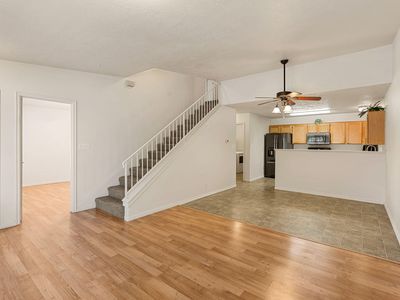
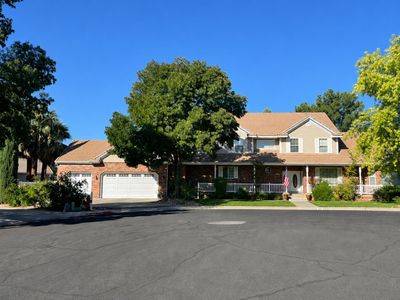
Investment Properties on Sale in Utah Today


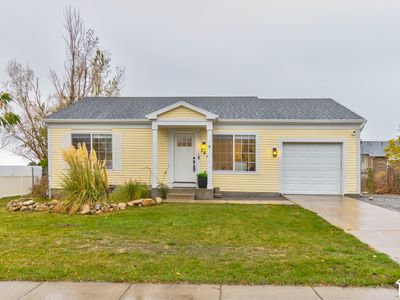
How Do Utah Property Taxes Affect DSCR Loan Qualification?
Property taxes are part of PITIA, so an incorrect tax estimate can lead to an incorrect DSCR calculation. Utah has an unusual feature investors should understand: qualifying long-term residential rentals may receive the state’s primary residential property-tax exemption even when the property owner lives elsewhere.
Qualifying residential properties receive an exemption equal to 45% of fair market value, leaving 55% as taxable value.
According to the Utah State Tax Commission, a property occupied as a primary residence by a qualifying full-time tenant may be eligible for this exemption. Second homes and properties that do not satisfy the residential-use requirements are treated differently.
Owners of residential rentals must meet the applicable declaration and documentation requirements. Eligibility should be confirmed with the county assessor, particularly after a purchase, change of ownership, or change in how the property is used.
Ask the county assessor whether the property qualifies for the exemption under its intended rental use. Obtain an appropriate estimate of taxes after acquisition, then calculate PITIA using the supported tax obligation. Do not assume a vacation rental receives the same treatment as a tenant-occupied primary residence.
This distinction can affect a Utah property’s monthly carrying costs and the loan amount its rent can support.
Can You Get a DSCR Loan for Airbnb or Short-Term Rentals in Utah?
Yes. Ziffy Mortgage offers financing for eligible short-term rental investment properties, but financing eligibility and permission to operate a vacation rental are separate questions.
Utah allows local governments to regulate short-term rentals through zoning and licensing. Under the Utah Office of the Property Rights Ombudsman’s guidance, cities and counties may impose restrictions on rental use, including where short-term rentals are permitted.
Short-term rentals are restricted to eligible zoning districts and require a business license. The city’s current rules also include limits on rental nights and licensing. Verify the property’s zoning and requirements through the official Salt Lake City short-term rental guidance.
Nightly rentals require appropriate licensing and must be permitted by zoning. Investors should also confirm any HOA restrictions and applicable tax obligations before relying on vacation rental income.
Local restrictions can determine whether a property can legally operate as a nightly rental. Investors should check the exact parcel, zoning classification, required business license, and applicable operational rules before purchasing.
How is short-term rental income evaluated? Acceptable income documentation depends on the loan program and property. Eligible scenarios may involve historical operating records, supported rental estimates, or other program-approved evidence. Peak-season nightly rates alone do not establish qualifying income.
Investors should also account separately for cleaning, property management, utilities, furnishing, replacement costs, and seasonal vacancies when assessing actual investment returns.
Explore our DSCR loan guide for more information about financing eligible rental strategies.
Can You Get a DSCR Loan in Utah With a Ratio Below 1.00?
A Utah rental property with a DSCR below 1.00 does not automatically become ineligible for financing. Ziffy Mortgage offers No-Ratio DSCR options for qualifying scenarios, although leverage, credit, reserves, and property characteristics still affect approval.
The property’s qualifying rent covers its monthly PITIA. Higher coverage can create a stronger financing profile.
Eligible borrowers may qualify through specialized options with more conservative leverage or other requirements.
Before switching loan programs, it is worth checking whether the property’s financing structure can be improved.
- Increase the down payment: A smaller loan amount generally reduces the principal and interest payment.
- Check qualifying rents: Obtain current leases and reliable comparables rather than relying on optimistic listing estimates.
- Verify taxes and insurance: Use an accurate property-specific estimate, including any applicable Utah residential exemption.
- Review association costs: HOA fees and assessments can substantially affect coverage.
- Consider eligible alternative terms: Available loan structures may affect the qualifying monthly payment.
Reducing the loan amount may improve the ratio, but it also commits more investor capital to the property. The goal is to select financing that remains sustainable after accounting for operating expenses and unexpected costs.
Utah DSCR Purchase Loans vs. Cash-Out Refinance
DSCR financing can support different stages of an investor’s ownership strategy. Ziffy Mortgage offers purchase loans, rate-and-term refinancing, and eligible cash-out refinancing for Utah investment properties.
| Financing Type | Maximum Eligible LTV | Common Purpose |
|---|---|---|
| Purchase | 85% | Acquire a rental property |
| Rate-and-term refinance | 80% | Replace an existing mortgage |
| Cash-out refinance | 75% | Access qualifying property equity |
For a rental property that has appreciated or undergone improvements, a DSCR cash-out refinance may provide access to equity without traditional employment-income qualification. The new loan still has to satisfy applicable LTV, rental-income, credit, and reserve requirements.
Borrowers should evaluate how refinancing affects the full monthly payment. A larger loan balance may reduce the property’s DSCR even when its rent remains unchanged.
Confirm the property’s current value, existing mortgage payoff, qualifying rent, property-tax treatment, and post-refinance PITIA. Investors should also compare the cost of refinancing with the actual benefit of accessing or restructuring equity.
For a broader explanation of qualification and refinancing options, read our complete DSCR financing guide.
What Should Utah Investors Check Before Applying for a DSCR Loan?
Utah DSCR Loan FAQs
What credit score do you need for a DSCR loan in Utah?
Ziffy Mortgage offers eligible Utah DSCR loans with credit scores starting at 620. The final financing terms depend on credit, DSCR, leverage, property characteristics, and other underwriting requirements.
How much down payment do I need for a Utah DSCR loan?
A standard 80% LTV purchase requires 20% down. Ziffy offers up to 85% purchase LTV for eligible scenarios, which corresponds to a 15% down payment. Not all borrowers and properties qualify for maximum leverage.
Can I get a DSCR loan in Utah without tax returns?
Yes. DSCR loans generally qualify borrowers using property rental income instead of personal tax returns, W-2s, or conventional debt-to-income calculations. Other documentation, including assets and property information, is still required.
Can I purchase a Utah investment property through an LLC?
Eligible Utah DSCR loans may accommodate LLC ownership. Investors should discuss the intended vesting structure early so loan documents, purchase contracts, and entity records can be reviewed appropriately.
Does Utah allow DSCR loans for Airbnb properties?
Ziffy offers DSCR financing for eligible short-term rental properties. However, Utah cities regulate vacation rentals independently through zoning and licensing. Investors must verify that the specific property’s intended use is permitted.
Can I qualify for a Utah DSCR loan below 1.00?
Potentially. Ziffy Mortgage offers eligible No-Ratio DSCR options. These may require lower leverage, sufficient reserves, or other compensating factors. A DSCR below 1.00 does not guarantee approval or rejection.
Are Utah rental properties eligible for the 45% residential tax exemption?
Qualifying properties occupied as a primary residence by a full-time tenant may be eligible. Requirements include residency and applicable owner declarations. Eligibility should be confirmed with the county assessor under Utah’s residential exemption rules.
Can I use a Utah DSCR loan for cash-out refinancing?
Yes. Ziffy offers eligible DSCR cash-out refinancing up to 75% LTV. The refinance must meet applicable property valuation, rental-income, credit, and loan requirements.
Which Utah city is best for a DSCR investment property?
There is no single best city. Ogden and Logan have different acquisition costs from Salt Lake City and Lehi, while St. George and Park City require additional attention to vacation rental regulations. Compare property-specific rental income, PITIA, maintenance, and acquisition cost before deciding.