



Editorial Integrity
Making sound real estate investment decisions begins with reliable, data-driven insights. At Ziffy.ai, we offer an AI-native real estate investing, proprietary data-driven trend analysis, investment mortgage programs like DSCR loans, and a network of over 500 investor-friendly real estate agents to deliver the expertise needed for informed decisions. Our content is crafted by experienced real estate professionals and backed by real-time market data, ensuring you receive accurate and actionable information. Through a rigorous editorial process, we strive to empower your investment journey with trustworthy and up-to-date guidance.
Key Takeaways: Virginia DSCR Loans
Market source: Virginia REALTORS®, September 2026. Loan figures describe Ziffy’s eligible DSCR financing options and are subject to underwriting.
Quick Answer: Can You Get a DSCR Loan in Virginia?
Yes. Ziffy Mortgage offers DSCR loans in Virginia for eligible investment properties, allowing borrowers to qualify primarily through the property’s rental income instead of traditional personal income documentation.
Ziffy offers purchase financing up to 85% LTV for qualifying scenarios, rate-and-term refinancing up to 80% LTV, and cash-out refinancing up to 75% LTV. The minimum eligible credit score is 620, with reserve requirements starting at two months of PITIA.
For Virginia investors, the biggest differences are local. A Northern Virginia condo, Richmond duplex, and Virginia Beach vacation rental can have very different purchase costs, insurance requirements, and qualifying rental income.
Table of Contents
How Does a DSCR Loan Work in Virginia?
A DSCR loan measures whether an investment property’s rental income can support its monthly housing payment. Instead of relying on W-2 income or personal tax returns to establish qualifying income, underwriting focuses on the property’s eligible rent and financing costs.
PITIA includes principal, interest, taxes, insurance, and applicable association dues.
Rent exceeds the monthly housing payment.
Rent equals the monthly housing payment.
Rent falls short of PITIA; eligible lower-ratio options may apply.
DSCR is not the same as net cash flow. Repairs, management, vacancy, and capital expenditures may still reduce investment returns even when a property meets the lender’s ratio requirement.
Investors can use the Ziffy investment resources to explore financing and property-analysis tools.
What Are the DSCR Loan Requirements in Virginia?
Ziffy Mortgage offers DSCR purchase and refinance options for qualifying non-owner-occupied investment properties in Virginia. The loan structure depends on borrower credit, rental coverage, property type, and requested leverage.
| Requirement | Ziffy DSCR Financing |
|---|---|
| Minimum credit score | 620 |
| Standard DSCR | 1.0 or higher |
| Lower DSCR | Eligible below-1.0 and no-ratio programs |
| Purchase financing | Up to 85% LTV for eligible scenarios |
| Rate-and-term refinance | Up to 80% LTV |
| Cash-out refinance | Up to 75% LTV |
| Cash reserves | Starting at two months of PITIA |
| Income qualification | Eligible property rental income |
| Property occupancy | Non-owner-occupied investment |
Eligible properties may include single-family rentals, townhomes, approved condos, and qualifying two-to-four-unit properties. Borrowers still need documentation for assets, credit, property valuation, ownership, and the transaction.
A 15% down payment is possible only where the borrower and property meet the applicable program’s higher-leverage conditions. It should not be assumed for every Virginia DSCR purchase.
Virginia Rental Market Comparison: Which Cities Have Higher Rent Benchmarks?
Virginia’s highest-rent markets are not automatically its strongest cash-flow markets. Acquisition prices, taxes, insurance, and property expenses must be measured alongside rental income.
Median monthly gross rent | US Census Bureau ACS 2020–2024 | Selected Virginia cities and Arlington County
Color intensity indicates relative median gross rent among the seven locations shown. This is a comparative grid, not a geographic map, investment-yield ranking, or forecast.
Monthly rent, US Census ACS 2020–2024. Bars scaled to $2,500.
Source: US Census Bureau QuickFacts. Median gross rent includes contracted rent and estimated tenant-paid utilities. Figures cover different housing types and are not adjusted for property size.
Arlington County’s $2,322 benchmark is more than twice Roanoke’s $996. Yet rent alone cannot establish whether an Arlington property has better DSCR potential. Investors need comparable acquisition prices and property-specific PITIA before drawing that conclusion.
Best Places to Buy Rental Property in Virginia With a DSCR Loan
Virginia offers several distinct rental-property strategies. For DSCR investors, the useful question is not which city has the highest rent, but which specific property can generate enough qualifying income to support its full monthly payment.
Northern Virginia: Arlington, Alexandria, and Fairfax
These markets warrant close attention to purchase prices and recurring condo or HOA expenses. Northern Virginia’s median sold price reached $744,950 in September 2026 across the Northern Virginia Association of Realtors’ reporting area.
Neighborhoods to research: Ballston, Clarendon, Crystal City, Old Town Alexandria, West End Alexandria, and Annandale.
Compare local rents with purchase costs, condo rental restrictions, association dues, and special assessments. A higher-rent location may still produce weak coverage if monthly carrying costs are substantial.
Richmond: Small Multifamily and Long-Term Rentals
Richmond offers an opportunity to compare older residential buildings, single-family homes, and smaller multifamily properties. The city’s Census median gross rent was $1,372 for 2020–2024.
Neighborhoods to research: Church Hill, Manchester, Northside, The Fan, and Museum District.
Older properties deserve careful inspections, particularly for major systems, deferred maintenance, and the legal status of additional rental units. Existing leases should be compared with supported market rent.
Virginia Beach and Norfolk: Hampton Roads Rentals
The Census median gross rent was $1,714 in Virginia Beach and $1,321 in Norfolk. Investors should distinguish conventional long-term housing from vacation-rental properties, where regulations and operating costs may differ.
Areas to research: Oceanfront, Town Center, Kempsville, Ghent, Ocean View, and Downtown Norfolk.
Property-specific flood exposure, insurance, association restrictions, and the intended rental strategy are particularly relevant here. Coastal location alone does not establish vacation-rental eligibility or revenue.
Charlottesville and Roanoke: Different Entry-Cost Profiles
Charlottesville’s Census median gross rent was $1,540, compared with $996 in Roanoke. The difference makes property-level acquisition costs especially important when comparing investment returns.
Areas to research: Belmont and Fry’s Spring in Charlottesville; Grandin Village, Old Southwest, and Raleigh Court in Roanoke.
Investors considering student-oriented or room-by-room rentals should verify occupancy rules, lease structures, and whether the proposed income is acceptable under the DSCR program.
City averages conceal differences between individual neighborhoods and housing types. Use comparable rental properties within the same ZIP code or immediate area, then verify the projected income against an actual lease or appraisal-supported rental estimate. The HUD Small Area Fair Market Rent resources offer additional ZIP-level benchmarks where available, although they are not substitutes for property-specific underwriting.
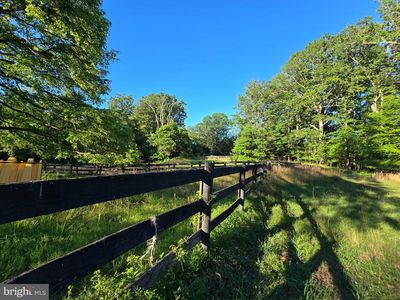
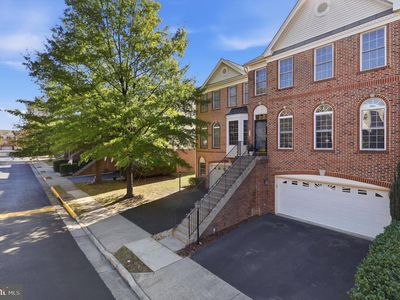
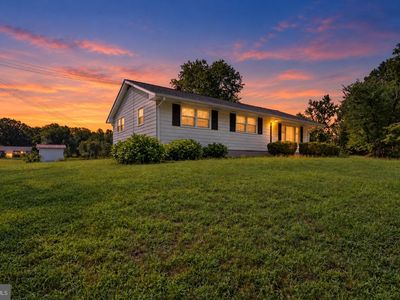
Investment Properties on Sale in Virginia Today


How Do Virginia Property Taxes, Insurance, and Closing Costs Affect DSCR Loans?
Two Virginia rentals collecting similar rent may qualify for different loan amounts because their ownership costs differ. For DSCR purposes, property taxes, insurance, and association dues directly affect PITIA.
Virginia real estate taxes are assessed locally. Investors should check the city or county assessor’s records and applicable tax rate rather than apply a single statewide rate. Use the expected tax obligation for the property being financed.
Before making an offer, obtain a property-specific landlord insurance estimate and review potential flood-insurance requirements. The FEMA Flood Map Service Center provides official flood-hazard mapping.
Virginia generally imposes a state deed recordation tax of $0.25 per $100 of taxable value and a separate mortgage or deed-of-trust recordation tax generally beginning at $0.25 per $100 of secured obligations. Additional local taxes and transaction-specific rules may apply. These affect acquisition or refinancing costs rather than ordinary monthly DSCR directly.
Sources: Virginia Code § 58.1-801 and § 58.1-803.
For condos and townhomes, association dues also belong in the monthly calculation. Review rental restrictions and pending special assessments before assuming a property qualifies.
Can You Use a DSCR Loan for Airbnb or Short-Term Rentals in Virginia?
DSCR financing may be available for eligible Virginia short-term rental investments, but property eligibility and local operating permission are separate questions. The intended use must comply with local rules, and qualifying income must meet the applicable underwriting requirements.
Virginia Beach
The city requires eligible short-term rentals to obtain an annual zoning permit before advertising or accepting reservations. Operator registration and transient occupancy tax obligations also apply.
Virginia Beach STR requirementsRichmond
In Richmond residential zoning districts, short-term rental operations generally must be located on the lot of the operator’s primary residence. This can restrict the use of a separately owned, non-owner-occupied property for short-term stays.
Richmond STR regulationsUnder Virginia Code § 15.2-983, localities may establish short-term rental registries. Zoning, permitting, and additional operating requirements must be checked with the particular jurisdiction.
Projected nightly revenue should not be treated as guaranteed qualifying rent. Before buying, establish the property’s legal use, obtain supported rental projections, and confirm how Ziffy will evaluate its income.
Can You Get a Virginia DSCR Loan With a Ratio Below 1.0?
Yes. Ziffy Mortgage offers eligible below-1.0 and no-ratio DSCR loan options in Virginia. These programs can help investors whose property rent does not fully cover the qualifying monthly housing payment.
Reducing the loan amount can lower the required principal and interest payment.
Document existing leases and comparable rents that support the property’s qualifying income.
Review eligible financing structures, including interest-only options where available.
Credit, available reserves, and property eligibility can influence financing choices.
A lower DSCR does not automatically prevent financing, but it can change the available LTV, pricing, and underwriting requirements. Investors should also consider whether the property will generate sufficient cash flow after maintenance, vacancies, and other operating expenses.

“I wouldn’t automatically walk away from a Virginia rental just because its DSCR comes in below 1.0. I’d want to understand what’s causing the shortfall first. Is the purchase price too high for the rent? Are we looking at unusually large condo dues? Would a different down payment change the monthly obligation enough to improve the numbers? Those are questions worth answering before deciding how to structure the financing. But I would also want the investor to understand what a lower ratio means for the property’s actual cash flow.”
DSCR Purchase, Refinance, and Cash-Out Loans in Virginia
Virginia investors can use DSCR financing to purchase rental properties, refinance existing investment mortgages, or access equity through an eligible cash-out refinance.
Purchase LTV
Purchase eligible income-producing residential investment properties, with financing up to 85% LTV in qualifying scenarios.
Rate-and-Term LTV
Replace an existing investment-property mortgage under eligible rate-and-term refinance guidelines.
Cash-Out LTV
Access eligible property equity while refinancing, subject to valuation, seasoning, and underwriting requirements.
Investors refinancing a Virginia rental should compare the proposed loan payment with current qualifying rent, property taxes, insurance, and association dues. A cash-out refinance can increase available capital, but a larger loan balance may also reduce the property’s DSCR.
Explore the Ziffy DSCR loan guide for additional financing information.
What Should Virginia Investors Check Before Applying for a DSCR Loan?
Before applying, verify the property’s qualifying income and ownership costs. The research should be specific to the address, not just the city or neighborhood.
Review existing leases, rental appraisal information, and comparable properties in the immediate market.
Include principal, interest, taxes, insurance, and applicable association dues.
Check permitted units, zoning, HOA restrictions, and short-term rental rules if applicable.
Consider repairs, maintenance, vacancies, and capital expenditures separately from the qualifying DSCR calculation.
Compare available LTV, loan structure, reserves, and any prepayment terms.

“Virginia is a good example of why I prefer looking at the individual rental rather than making assumptions about an entire market. An investor considering an Arlington condo may need to spend more time reviewing HOA charges and the total purchase cost. Someone evaluating a property around Virginia Beach may need to pay closer attention to insurance and whether the intended rental use is permitted. The underwriting formula is the same, but the details that affect the outcome can be very different. I would rather identify those expenses early than discover them after an appraisal or insurance quote changes the numbers.”
Use the Ziffy DSCR loan calculator to compare rental income with the proposed monthly housing payment before moving forward.
Virginia DSCR Loan FAQs
What credit score is required for a DSCR loan in Virginia?
Ziffy Mortgage offers eligible Virginia DSCR programs with a minimum credit score of 620. The required score for a particular loan depends on its DSCR, LTV, property type, and other underwriting factors.
How much down payment do I need for a Virginia DSCR loan?
Ziffy offers purchase financing up to 85% LTV for eligible scenarios, equivalent to a 15% down payment. Other transactions may require more equity depending on the applicable program.
Can first-time real estate investors get DSCR loans in Virginia?
First-time investors may be eligible, depending on the loan program. Approval also considers credit, available assets, property type, rental coverage, and other underwriting requirements.
Do Virginia DSCR loans require tax returns or W-2s?
DSCR financing generally does not require traditional personal income documentation to establish qualifying income. Borrowers still provide credit, asset, identity, and property-related documentation.
Can I finance a Virginia duplex or fourplex with a DSCR loan?
Eligible two-to-four-unit residential investment properties may qualify. The units must be legally permitted, and rental income and property condition must satisfy the applicable underwriting standards.
Can I use a DSCR loan for a Virginia Beach Airbnb?
Potentially, if the property, proposed rental operation, and qualifying income satisfy the loan program. Virginia Beach also requires applicable short-term rental registrations, permits, and approvals. Verify eligibility before committing to a purchase.
What happens if my Virginia rental has a DSCR below 1.0?
Ziffy offers eligible below-1.0 and no-ratio options. Available loan structures may differ in LTV, pricing, and borrower requirements. A lower ratio also means the rent may not cover the full monthly housing payment.
Can I cash out equity from a Virginia investment property?
Yes. Ziffy offers eligible DSCR cash-out refinancing up to 75% LTV, subject to appraisal, equity, qualifying rental income, and underwriting requirements.
Which Virginia city is best for DSCR rental property investing?
There is no single best city. Arlington and Alexandria have higher historical median rents among the markets compared, while Richmond, Norfolk, and Roanoke have different acquisition and rental profiles. Compare property-specific rental income, purchase price, taxes, insurance, and maintenance costs before choosing a market.