


Editorial Integrity
Making sound real estate investment decisions begins with reliable, data-driven insights. At Ziffy.ai, we offer an AI-native real estate investing, proprietary data-driven trend analysis, investment mortgage programs like DSCR loans, and a network of over 500 investor-friendly real estate agents to deliver the expertise needed for informed decisions. Our content is crafted by experienced real estate professionals and backed by real-time market data, ensuring you receive accurate and actionable information. Through a rigorous editorial process, we strive to empower your investment journey with trustworthy and up-to-date guidance.
Ohio gives rental property investors several different markets to work with. Columbus has a higher regional rental benchmark, Cleveland offers a different acquisition-price environment, and smaller cities such as Akron, Toledo, and Youngstown call for closer attention to property condition and local rental demand.
A DSCR loan in Ohio allows eligible investors to qualify for investment property financing primarily through the property’s rental income rather than traditional personal income documentation. But the purchase price is only part of the calculation. Property taxes, insurance, repairs, and the rent an appraiser can support all affect how a deal qualifies.
Quick Answer: Can You Get a DSCR Loan in Ohio?
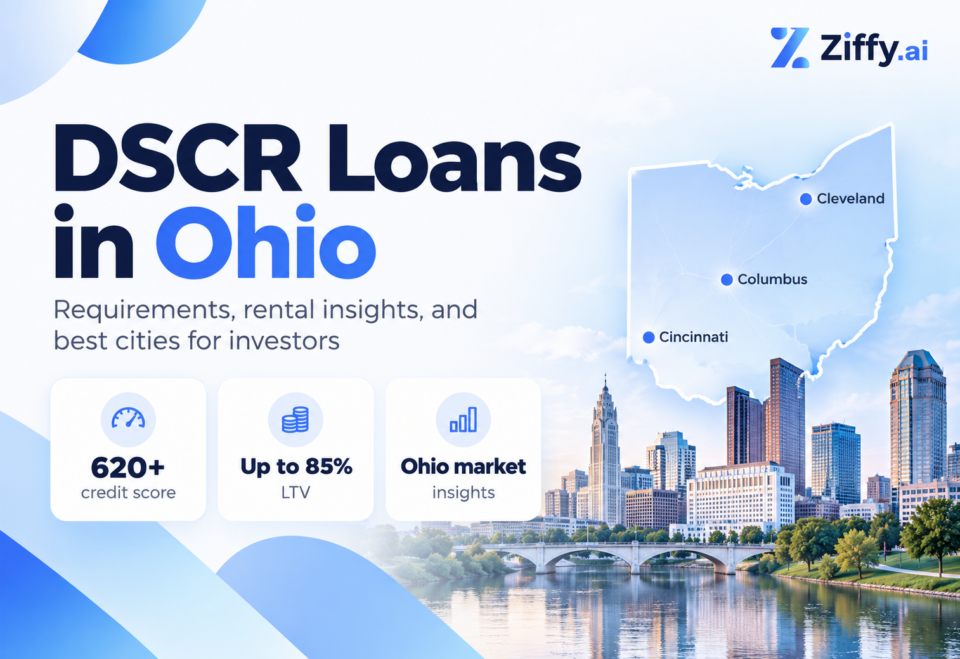
Yes. Ziffy offers DSCR loans in Ohio for eligible non-owner-occupied investment properties, using qualifying rental income and the property’s monthly housing payment to evaluate debt coverage.
Ziffy offers a minimum eligible credit score of 620, purchase financing up to 85% LTV for eligible scenarios, and reserves starting at two months. Options are also available for qualifying properties with a DSCR below 1.00.
Ohio investors should evaluate rental income alongside neighborhood-level expenses and property condition. A lower purchase price does not necessarily produce a stronger DSCR.
Key Takeaways: Ohio DSCR Loans at a Glance
Source: HUD FY 2026 Fair Market Rent Schedule. Financing limits depend on eligibility and underwriting.
Table of Contents
How Does a DSCR Loan Work in Ohio?
A debt service coverage ratio loan measures how much qualifying rental income a property generates relative to its monthly housing payment. Investors generally do not need W-2s, pay stubs, or personal income tax returns to establish qualifying income.
PITIA = Principal, Interest, Taxes, Insurance, and Association Dues
For Ohio investors, the biggest mistake is treating the DSCR as a complete cash-flow calculation. Maintenance, vacancies, property management, and future repairs still need to be considered separately. The lender’s DSCR calculation does not automatically deduct all those operating expenses.
Use the Ziffy DSCR calculator to evaluate financing costs before selecting a property.

“The number I want an investor to look at first is the full monthly payment, not just the mortgage payment. In Ohio, two properties with similar rents can qualify very differently once you account for taxes, insurance, and association dues. Getting those numbers right early can save an investor from pursuing the wrong deal.”
Steven GlickWhat Are the DSCR Loan Requirements in Ohio?
Ziffy offers DSCR financing for eligible Ohio investment properties, including purchases, rate-and-term refinances, and cash-out refinances. Qualification depends on the property’s rental income, credit profile, requested leverage, and overall eligibility.
| Requirement | Ziffy DSCR Financing |
|---|---|
| Minimum credit score | 620 |
| Preferred DSCR | 1.00 or higher |
| Below-1.00 DSCR | Eligible lower-ratio and No-Ratio options |
| Purchase LTV | Up to 85% for eligible scenarios |
| Rate-and-term refinance LTV | Up to 80% |
| Cash-out refinance LTV | Up to 75% |
| Reserves | Starting at two months of PITIA |
| Loan terms | 30-year fixed options |
| Income qualification | Eligible property rental income |
| Occupancy | Non-owner-occupied investment properties |
Eligible property types can include single-family rentals, condos, townhomes, and qualifying two-to-four-unit properties. Lenders may require an appraisal, rental-income documentation, bank statements showing reserves, identification, and applicable transaction documents.
How much down payment do you need? Eligible purchases at 85% LTV require 15% down. Other loan scenarios may require 20% to 25% or more, depending on credit, DSCR, property type, and underwriting.
These are program ceilings rather than guaranteed terms. A property with a low DSCR, unusual condition, or insufficient reserves may qualify for a different loan structure.
Ohio Rental Market Comparison: Where Are Two-Bedroom Rent Benchmarks Higher?
Ohio’s regional rental benchmarks differ considerably. The Columbus area has the highest two-bedroom benchmark among the major Ohio markets compared here, while Youngstown-Warren and Toledo have lower benchmarks.
These figures come from HUD’s FY 2026 Fair Market Rent Schedule. Fair Market Rents are housing-program benchmarks, not median advertised rents or automatic appraised rent figures.
Ohio Two-Bedroom Rental Benchmarks
HUD FY 2026 | Monthly Fair Market Rent | Selected metro areas
Source: HUD FY 2026 Fair Market Rent Schedule. Bar lengths are scaled to Columbus at 100%. HUD metro areas include surrounding counties; figures do not represent city neighborhoods, actual asking rents, or investment yields.
The difference between Columbus and Youngstown-Warren is $457 per month in HUD’s two-bedroom benchmark. But higher rent alone cannot establish stronger investment performance. Investors also need to compare property prices, taxes, insurance, financing costs, and repairs.
Ohio’s housing market also faces affordability pressure. The Ohio Housing Finance Agency’s FY 2026 Housing Needs Assessment reported a 22% inflation-adjusted increase in the state’s median two-bedroom rent from December 2019 to December 2024.
Ohio Rental Market Comparison: Where Are Two-Bedroom Rent Benchmarks Higher?
Ohio’s regional rental benchmarks differ considerably. The Columbus area has the highest two-bedroom benchmark among the major Ohio markets compared here, while Youngstown-Warren and Toledo have lower benchmarks.
These figures come from HUD’s FY 2026 Fair Market Rent Schedule. Fair Market Rents are housing-program benchmarks, not median advertised rents or automatic appraised rent figures.
Ohio Two-Bedroom Rental Benchmarks
HUD FY 2026 | Monthly Fair Market Rent | Selected metro areas
Source: HUD FY 2026 Fair Market Rent Schedule. Bar lengths are scaled to Columbus at 100%. HUD metro areas include surrounding counties; figures do not represent city neighborhoods, actual asking rents, or investment yields.
The difference between Columbus and Youngstown-Warren is $457 per month in HUD’s two-bedroom benchmark. But higher rent alone cannot establish stronger investment performance. Investors also need to compare property prices, taxes, insurance, financing costs, and repairs.
Ohio’s housing market also faces affordability pressure. The Ohio Housing Finance Agency’s FY 2026 Housing Needs Assessment reported a 22% inflation-adjusted increase in the state’s median two-bedroom rent from December 2019 to December 2024.
Ohio Rental Heat Map: Comparing Regional Rent Benchmarks
Use this regional comparison to see which Ohio metropolitan areas have higher two-bedroom rental benchmarks. Darker shading represents a higher HUD FY 2026 Fair Market Rent, not stronger investment returns.
Source: HUD FY 2026 Fair Market Rents. Categories are visualization bands, not official HUD rent tiers. Geographic labels identify broader market areas.
Investors can use this statewide overview to narrow their search, then examine ZIP-code rent estimates, comparable leases, property tax records, and vacancy conditions. The property’s own rental appraisal remains more relevant to DSCR qualification than a regional benchmark.
Best Ohio Cities and Neighborhoods to Research for DSCR Loans
Columbus, Cleveland, Cincinnati, Dayton, Akron, and Toledo deserve separate analysis because their rental benchmarks, housing stock, and acquisition costs differ. The best city for a DSCR loan is the one where a specific property’s qualifying rent supports its financing costs at an acceptable purchase price.
Columbus: Evaluate Rent Against Acquisition Cost
Columbus has a $1,430 FY 2026 HUD two-bedroom rental benchmark. Investors can examine Clintonville, North Linden, Franklinton, and areas near Ohio State University, while comparing rental use, acquisition costs, and property condition.
DSCR consideration: Higher regional rents do not automatically offset a higher purchase price. Compare qualifying rent against the property’s complete PITIA before making an offer.
Cleveland: Check Property Condition and Rental Compliance
Cleveland’s regional two-bedroom benchmark is $1,279. Investors researching Old Brooklyn, Detroit-Shoreway, Slavic Village, and Collinwood should examine block-level conditions, existing leases, renovation requirements, and property tax records.
DSCR consideration: Cleveland requires rental registration, and qualifying older rental units are subject to lead-safe certification requirements. These costs and obligations should be reviewed before closing.
Cincinnati: Compare Neighborhoods Within the Same Metro
Cincinnati’s HUD two-bedroom benchmark is $1,353. Neighborhoods worth researching include Oakley, Price Hill, Westwood, and Northside. Rent comparables and property types can differ within these areas, so metro averages should not be substituted for local evidence.
DSCR consideration: Check property taxes, building condition, and achievable rents independently. A multifamily property’s qualifying income should be evaluated unit by unit.
Dayton: Examine Smaller Multifamily Properties
Dayton has a $1,273 two-bedroom HUD benchmark. Investors can research Belmont, Five Oaks, South Park, and surrounding communities, paying particular attention to duplex configurations, permitted units, and property condition.
DSCR consideration: Multiple rental units may contribute qualifying rental income, but unit legality, lease documentation, and the appraisal must support the proposed financing.
Akron: Include Repairs in the Acquisition Budget
Akron’s two-bedroom HUD benchmark is $1,268. Highland Square, Ellet, Firestone Park, and North Hill are useful starting points for neighborhood-level research.
DSCR consideration: Evaluate the property’s mechanical systems, roof, foundation, and deferred maintenance. A low purchase price can lose its advantage when substantial repairs are needed.
Toledo and Youngstown: Review Rent Support Carefully
Toledo has a $1,076 HUD two-bedroom benchmark, compared with $973 for Youngstown-Warren. Investors can begin with Toledo’s Old West End and West Toledo, or Youngstown’s Brownlee Woods and Boardman-area properties, while distinguishing municipal boundaries from surrounding communities.
DSCR consideration: Verify appraised market rent, condition, local demand, and lender minimum loan requirements. Lower-priced properties can face financing limitations even when the projected rent appears adequate.
Compare recent rental listings with executed leases where available, inspect the property, review county auditor records, and confirm local occupancy requirements. Neighborhood names identify research locations here, not verified rankings for profitability, appreciation, or tenant demand.
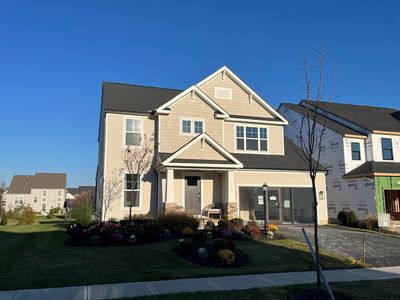
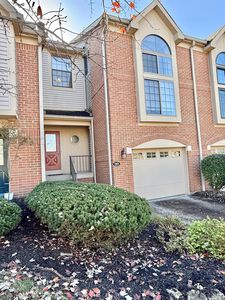
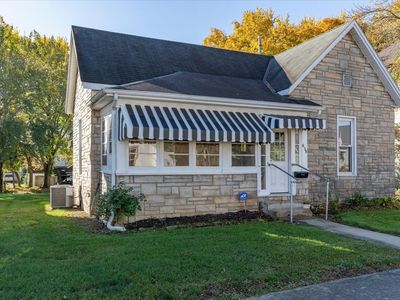
Investment Properties on Sale in Ohio Today


How Do Ohio Property Taxes, Insurance, and Rental Rules Affect DSCR Loans?
Ohio investment properties need to be assessed individually because the monthly cost of ownership can change significantly between addresses. The most reliable DSCR evaluation uses the property’s actual tax assessment, insurance quote, and association dues rather than a statewide estimate.
Property Taxes and Insurance
Check the county auditor’s current property records and consider whether a sale, reassessment, or change in exemptions could affect future taxes. Insurance should reflect the property’s intended rental use, building condition, and coverage needs.
Cleveland Rental Registration and Lead Safety
The City of Cleveland requires rental registration and lists lead-safe certification documentation for rental properties built before 1978. Owners who live outside Cuyahoga County and its neighboring counties must also designate a local agent in charge.
Ohio Security Deposit Requirements
Under Ohio Revised Code Section 5321.16, certain security deposit amounts above the greater of $50 or one month’s rent accrue 5% annual interest when the tenant occupies the premises for six months or more. The statute also establishes requirements for itemized deductions and returning the balance after a tenancy ends.
Investor takeaway: A property may qualify for financing based on its rental income while still requiring significant spending to become legally rentable or remain compliant. Evaluate those obligations as part of the purchase decision, not after closing.
Can You Use a DSCR Loan for Airbnb or Short-Term Rentals in Ohio?
Eligible short-term rental properties in Ohio may qualify for DSCR financing, but the lender must accept the property type and proposed rental-income documentation. Projected nightly revenue is not automatically treated as qualifying monthly income.
Local short-term rental regulations also matter. Columbus, for example, has a short-term rental permitting process covering qualifying properties, including non-primary residences. Hosts should review the City of Columbus short-term rental requirements before listing a property.
For underwriting and investment analysis, assess:
- Whether short-term rental use is permitted at the address.
- Whether the DSCR program accepts the proposed income documentation.
- Cleaning, utilities, platform fees, management, and furnishing costs.
- The property’s viability as a long-term rental if short-term rental income falls short.
Investors can also use Ziffy’s investment property analysis tools to evaluate potential rental strategies before requesting financing.
Can You Get a DSCR Loan in Ohio With a Ratio Below 1.00?
Yes. Ziffy offers eligible Ohio investors lower-DSCR and No-Ratio financing options. A property with a DSCR below 1.00 generates less qualifying rental income than its monthly PITIA, but that does not necessarily eliminate financing options.
Approval depends on credit, available equity, reserves, property characteristics, and the applicable loan program. Lower-ratio financing can involve additional underwriting requirements or less favorable terms.
Ways to Improve an Ohio Property’s DSCR
A larger down payment may reduce principal and interest payments.
Support qualifying rental income with appropriate leases and market comparisons.
Check tax estimates, insurance quotes, and applicable association charges.
Evaluate the payment and eligibility implications of available financing structures.

“A property below 1.00 isn’t automatically a bad investment, but I would want the buyer to understand exactly where the shortfall comes from. Is it the purchase price, the financing structure, or rent that simply can’t support the debt? That answer helps determine whether changing the loan structure makes sense or whether the investor should reconsider the property.”
Dorian Adams-WalkerDSCR Purchase, Refinance, and Cash-Out Loans in Ohio
Ziffy offers several DSCR financing options for eligible Ohio rental properties, depending on whether an investor is purchasing a property, replacing an existing mortgage, or accessing equity.
DSCR Purchase Loans
Finance an eligible Ohio investment property using qualifying rental income. Maximum leverage depends on the borrower’s credit profile, property characteristics, and underwriting.
Rate-and-Term Refinancing
Replace an eligible investment property’s existing mortgage without a substantial equity withdrawal. Compare the new payment, closing costs, and loan terms before proceeding.
DSCR Cash-Out Refinancing
Access eligible equity in an Ohio rental property while retaining ownership. The new loan must satisfy applicable DSCR, appraisal, equity, and underwriting requirements.
Investors considering refinancing should calculate whether the new payment remains sustainable under the property’s current qualifying rent. Pulling equity out may increase monthly debt service and reduce the DSCR.
Ohio DSCR Loan FAQs
What credit score do I need for a DSCR loan in Ohio?
Ziffy offers eligible Ohio DSCR loans with credit scores starting at 620. A higher score may provide access to different leverage or pricing options, subject to underwriting.
How much down payment is required for an Ohio DSCR loan?
Eligible purchases may qualify for up to 85% LTV, equivalent to a 15% down payment. Other scenarios may require more equity depending on credit, property type, and DSCR.
Can I qualify for an Ohio DSCR loan without W-2 income?
Yes. DSCR financing generally uses qualifying property rental income rather than requiring traditional personal income verification through W-2s, pay stubs, or tax returns.
Can I use a DSCR loan to buy a duplex in Cleveland?
Yes, eligible two-unit investment properties may qualify. The property’s rental income, legal unit status, appraisal, condition, and local rental compliance must satisfy underwriting requirements.
Can I get an Ohio DSCR loan with a ratio below 1.00?
Yes. Ziffy offers eligible below-1.00 and No-Ratio DSCR options. Availability and terms depend on credit, reserves, equity, and property eligibility.
Which Ohio city is best for DSCR rental investments?
There is no universally best city. Columbus has the highest HUD two-bedroom rental benchmark among the markets compared here, but a stronger rental benchmark does not guarantee a higher DSCR. Evaluate the property’s qualifying rent, acquisition cost, taxes, insurance, and condition.
Can I refinance an Ohio rental property and take cash out?
Yes. Ziffy offers eligible DSCR cash-out refinancing up to 75% LTV. The available proceeds depend on the appraisal, outstanding loan balance, costs, and underwriting.
Are DSCR loans available for Ohio Airbnb properties?
Eligible short-term rental properties may qualify, subject to program rules, accepted income documentation, and local short-term rental restrictions. Check municipal permits and property-specific restrictions before purchasing.