





Editorial Integrity
Making sound real estate investment decisions begins with reliable, data-driven insights. At Ziffy.ai, we offer an AI-native real estate investing, proprietary data-driven trend analysis, investment mortgage programs like DSCR loans, and a network of over 500 investor-friendly real estate agents to deliver the expertise needed for informed decisions. Our content is crafted by experienced real estate professionals and backed by real-time market data, ensuring you receive accurate and actionable information. Through a rigorous editorial process, we strive to empower your investment journey with trustworthy and up-to-date guidance.
For eligible DSCR purchases, the DSCR down payment can go as low as 15%. In practice, many investors need 20% to 30% down for a cleaner file. The minimum allowed down payment and the right down payment are often two different numbers. Because our current DSCR program offers purchase LTV up to 85%, that translates to a 15% minimum down payment in eligible scenarios.
At Ziffy, we do not treat down payment like an isolated checkbox. We treat it as part of the full deal structure. On a DSCR loan, your down payment changes more than your cash to close. It changes the loan amount, the monthly debt service, the DSCR itself, and sometimes whether the deal clears comfortably or barely holds together.
Ziffy Mortgage DSCR loan underwrites the loan on rental income and PITIA rather than personal DTI, which is exactly why down payment matters so much more here than it does in a standard owner-occupied conversation.

Lucas Hernandez,
Loan Officer, Ziffy, NMLS #2171747
Table of Contents
Quick Answer
If the property has strong rent support and the rest of the file is clean, the minimum down payment can work. If the file is thinner, the smarter answer is often more equity. That is why many DSCR investors land at 20%, 25%, or 30% down even when the program floor is lower.
At Ziffy, our DSCR loan terms us up to 85% LTV for purchases, but our live listing data shows why the floor is not always the target. Across current listing pages reviewed on April 9, 2026, we can see examples ranging from 0.56x DSCR to 1.99x DSCR, all modeled with the same stated assumptions of 6.0% rate, 30-year fixed, 30% down, 1% tax, and 0.5% insurance. The spread is wide. That is exactly why there is no one-size-fits-all down payment answer.
Why DSCR Loan Down Payment Matters
On a conventional owner-occupied mortgage, borrowers often think about down payment as a pricing or cash-to-close question. On a DSCR loan, it is also a ratio question.
At Ziffy, we underwrite DSCR loan around property income versus PITIA. That means your down payment directly affects the monthly payment the rent has to cover. A smaller down payment increases leverage. Higher leverage increases monthly debt service. Higher debt service can compress the DSCR fast, especially once real taxes, insurance, and HOA dues are fully modeled. Our current DSCR page and live listing pages both present the loan through that same lens.
This is the distinction many investors miss. A lower down payment does not just mean less cash up front. It can also mean less margin for error, less pricing flexibility, and less room for taxes or insurance to come in higher than the early estimate.
What we see across our live listings right now
One of the easiest ways to make this concrete is to look at the DSCR math already visible on our platform.
Property | Price | Est. rent | Total monthly debt service | Displayed DSCR | What it shows |
|---|---|---|---|---|---|
$234,900 | $810 | $1,446 | 0.56x | Appreciation-led deal that sits below standard threshold | |
$144,000 | $1,148 | $1,003 | 1.14x | Qualifies, but with limited extra room | |
$150,000 | $1,331 | $1,007 | 1.32x | Comfortably qualifies | |
$175,000 | $2,184 | $1,099 | 1.99x | Stronger coverage and much more flexibility |
All four listing pages above show the same modeling assumptions: 6.0% rate, 30-year fixed, 30% down, 1% tax, and 0.5% insurance. That consistency matters because it lets you compare thin deals and strong deals on the same base framework instead of comparing random underwriting setups.
Example From Ziffy.ai Platform To Understand How DSCR Works
Let us take the example of 2006 Tibiletti Dr, Victoria, TX, with the property listed at $144,000 with $1,148 per month in estimated rent, $1,003 in total monthly debt service, and a 1.14x DSCR. You can see our entire investment analysis and see that the spread is thin and we have also noted that a larger down payment reduces the monthly debt load and widens the margin.
That is exactly the kind of property where down payment strategy matters. On a property like this, pushing leverage harder can turn an acceptable file into a fragile one. Bringing in more equity does not just lower the payment. It gives the deal more room to stay intact when underwriting sharpens the numbers.
Now compare that with 1113 N Hamilton St, Gonzales, TX, with $1,331 estimated rent, $1,007 total monthly debt service, and 1.32x DSCR, with the page labeling it as comfortably qualified. That is a very different file feel, even though both are modeled under the same standard assumptions.
Easy Way to Think About DSCR Loan Down Payment Ranges
Here is the practical framework:
Down payment | Equivalent LTV | What it usually means for the deal |
|---|---|---|
15% down | 85% LTV | Maximum leverage. Best reserved for stronger files and stronger rent support. Least room for taxes, insurance, or appraisal-rent pressure. |
20% down | 80% LTV | More breathing room than the floor. Often a cleaner fit for standard purchase files. |
25% down | 75% LTV | A common middle ground when the investor wants better coverage and more flexible deal math. |
30% down | 70% LTV | More conservative structure. Often useful for tighter markets, lower-yield assets, or files that need stronger coverage. |
The point is not that 30% down is always better. More cash into one property also means more capital tied up in one property. The point is that stronger files can support more leverage, while thinner files usually need more structure. Our live listings make that visible. A 0.56x or 1.14x file does not behave like a 1.32x or 1.99x file, even under the same platform assumptions.
Lucas Hernandez,
Loan Officer, Ziffy, NMLS #2171747
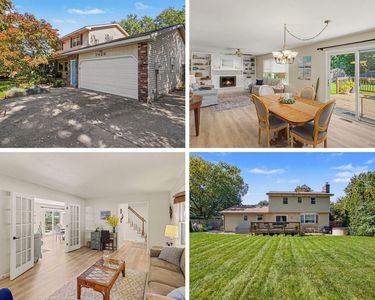
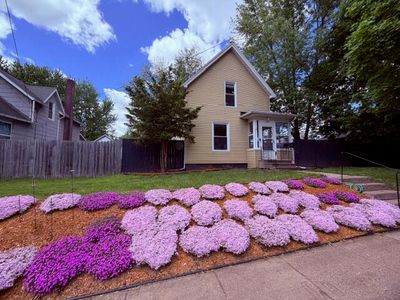
Investment Properties on Sale Today


What Usually Pushes the Required Down Payment Higher
1. Thin rent-to-payment coverage
If the rent only barely covers the projected payment, the file has less tolerance for leverage. Higher down payment lowers the loan amount, lowers the payment, and gives the ratio more room. We see that clearly across our live listings. A 1.14x file can work. It just does not have the same comfort level as a 1.32x or 1.99x file.
2. Taxes and insurance
A pattern we’ve noticed is that investors who settle on a down payment before they get realistic tax and insurance numbers often end up restructuring at pre-approval. The early estimate rarely matches the final underwriting reality in high-tax or high-insurance markets.
3. HOA dues and other recurring costs
HOA dues can materially change coverage. Our Canyon Lake listing at 1101 Parkview Dr APT B15 shows $2,076 estimated rent and a strong investment summary, but the listing also states $250 monthly HOA dues. Recurring costs like that can make a bigger difference to DSCR than many investors expect.
4. No-Ratio or weaker-ratio structures
If the property does not naturally produce a strong DSCR, the file usually needs another support point. In practice, that often means more equity, lower leverage, or both. At Ziffy Mortgage, you get the best rates are 1.0+ DSCR, but we also offer a No Ratio option, which is exactly why down payment and leverage still matter even when the deal is not being structured around a strong ratio from day one.
5. Strategy mismatch
A strong cash-flow rental and an appreciation-led property do not want the same leverage profile. Our Waynesburg listing at 935 Woodland Ave explicitly frames the asset as an appreciation play and says to structure with a larger down payment to optimize coverage. That is a real-world example of why “What is the minimum?” is usually the wrong first question.
Reserves Matter Separately From Down Payment
One of the most common mistakes we see is treating down payment as the entire liquidity conversation. It is not.
Post-closing reserves are usually a separate requirement from the down payment itself. You can have enough cash to close and still have a weaker file if your remaining liquidity is too thin. That matters even more for investors who are trying to maximize leverage on paper.
To be clear, a file can look acceptable at the minimum down payment and still feel weak once reserves are reviewed. This is one reason the smallest permitted down payment is not always the smartest structure.
What About No-Ratio DSCR?
A standard DSCR file usually works best when the rental income clearly supports the projected PITIA. A Ziffy Mortgage No-Ratio DSCR option can sometimes help when the ratio is weaker (between 0 -1), but that does not mean the investor can assume the same leverage. In practice, weaker-ratio files often need a compensating factor, and that can mean lower leverage, more equity, or both.
The reason this matters is that some investors hear “No-Ratio” and assume the down payment becomes less important. In reality, the opposite often happens. If the property is not naturally producing strong coverage, the structure usually has to get stronger somewhere else.
How Investors Should Choose the Right Down Payment
A smarter DSCR down payment decision usually follows this order:
Start with the property’s real rent support
Do not base the structure on optimistic rent assumptions. Use the supportable rent the file can actually stand behind.
Model the full PITIA, not just principal and interest
Taxes, insurance, and HOA dues can be the difference between a file that clears and one that gets reworked.
Decide whether you are optimizing for leverage or durability
There is nothing wrong with using leverage aggressively if the property can support it. But if the deal is already tight, forcing the lowest down payment can create fragility instead of efficiency.
Keep reserves in view
Your down payment and your post-closing liquidity need to make sense together.
Match the structure to the property type
A straightforward long-term cash-flow rental usually gives you more leverage flexibility than a lower-yield appreciation deal.

Steven Glick,
Director of Mortgage Sales, NMLS #1231769
So How Much Down Payment Do Most Investors Really Need?
Most investors should not start with the question, “What is the minimum?” They should start with, “What down payment gives this property a clean DSCR structure?”
For some properties, that answer may still be 15% down. For many others, it lands closer to 20% to 30% because that is where the payment, PITIA, reserves, and rent support align more comfortably. According to our closed loan data, the most common down payment on DSCR purchases we’ve financed is between 20% – 25%, even though the program floor sits at 15%.
When a Bigger Down Payment is Usually Worth It
A larger down payment often makes sense when:
- the property is in a high-tax or high-insurance market
- the yield is modest and the file needs stronger coverage
- the investor wants a cleaner monthly payment and less pressure on the ratio
- the goal is stability, not maximum leverage
- the file is already tight because of reserves, pricing, or asset profile
It can also make sense when the investor is buying an appreciation-led property where current rent is not especially strong. In those deals, extra equity can be the difference between a stretched file and a workable one.
When Using the Minimum Down Payment Can Still Make Sense
The minimum down payment can still be a rational move when:
- the property’s rent support is strong
- the taxes and insurance are well-behaved
- the investor is intentionally prioritizing leverage
- reserves are still solid after closing
- the file is not depending on best-case assumptions to clear
In our experience, the files where 15% down holds up cleanly are ones where the qualifying rent comfortably clears 1.20 DSCR before we even begin underwriting
Bottom Line
For a DSCR loan, the minimum down payment can be as low as 15% on eligible purchase files. But most investors should not treat that number as the target by default.
The better question is how much down payment the property needs to produce a clean monthly payment, a workable DSCR, and a stable post-closing position. In many cases, that means somewhere between 20% and 30% down. At Ziffy, the strongest DSCR structures are usually the ones where leverage, reserves, rent support, and ownership strategy are aligned before the file gets deep into underwriting.
FAQs
What is the minimum down payment for a DSCR loan?
For eligible purchase files, the minimum can be as low as 15% down, which corresponds to 85% LTV. But that is a program floor, not the right structure for every property.
Is 20% down more common for a DSCR loan?
In practice, many investors land between 20% and 30% down because that range often gives the deal cleaner payment math and better DSCR support.
Why does a DSCR loan sometimes need more down payment than expected?
Because the down payment affects the loan amount, and the loan amount affects the monthly debt service the rent has to cover. Once taxes, insurance, and HOA dues are modeled into PITIA, some files need more equity to stay clean.
Does a bigger down payment improve DSCR?
Yes. A bigger down payment reduces the loan amount, which usually reduces principal and interest and improves the debt-service side of the ratio.
Are reserves the same as down payment?
No. Reserves are separate from the down payment. You can have enough cash to close and still have a weaker file if your post-closing liquidity is too thin.
Can a low-DSCR property still qualify?
Sometimes, depending on the structure. But weaker-ratio or No-Ratio scenarios often need other strengths in the file, and that can include more equity.