





Editorial Integrity
Making sound real estate investment decisions begins with reliable, data-driven insights. At Ziffy.ai, we offer an AI-native real estate investing, proprietary data-driven trend analysis, investment mortgage programs like DSCR loans, and a network of over 500 investor-friendly real estate agents to deliver the expertise needed for informed decisions. Our content is crafted by experienced real estate professionals and backed by real-time market data, ensuring you receive accurate and actionable information. Through a rigorous editorial process, we strive to empower your investment journey with trustworthy and up-to-date guidance.
Quick answer

Investment property loans are not one single product. For most real estate investors, the financing paths that matter are DSCR loans for stabilized rentals, bridge loans for transitional deals, fix-and-flip loans for rehab-and-resale projects, full documentation loans for borrowers with stronger income documentation, and multifamily or commercial financing once a property reaches five or more units.

As of March 2026, our DSCR benchmark starts at 6.25%, with benchmark tiers of 6.50% at 80% LTV, 6.375% at 75% LTV, and 6.25% at 70% LTV.
Table of Contents
Most investors think portfolio growth depends on finding the next great property. In practice, growth usually breaks or compounds at the financing level.
Two investors can buy similar properties in similar markets and still end up on very different paths. One gets boxed in by income-based qualification, thin reserves, or the wrong loan product. The other keeps moving because the financing structure fits the strategy, preserves liquidity, and leaves room for the next acquisition.
That is why investment property financing deserves more attention than it usually gets. The loan does not just fund the property. It shapes leverage, cash flow, risk, and how fast you can buy again.
At Ziffy, the lending stack is built around actual investor use cases rather than generic mortgage categories.
We offer DSCR loans for rental-property cash-flow qualification, Fix & Flip loans for short-term rehab projects, Bridge loans for transitional scenarios, and Full Documentation loans for borrowers who want a more traditional income-based path. We are also the first AI-native real estate investing platform with property search, deal analysis and financing for investors in one place.
This guide explains how investment property loans work in 2026, how the main Ziffy loan types differ, what we actually look at when they review a file, and how to improve your approval odds before you apply.

Steven Glick,
Director of Mortgage Sales
Key Takeaways:
- Investment property rates in 2026 typically range from ~6% to 8%+ depending on loan type and risk profile.
- DSCR loans allow you to qualify based on rental income, not personal income.
- Conventional loans offer the lowest rates but require W-2 income, DTI, and stricter underwriting.
- Most investors should expect 20%–30% down payment and 6+ months reserves.
- Your loan structure directly impacts cash flow, leverage, and long-term portfolio growth
What Is an Investment Property Loan?
An investment property loan is financing used to purchase or refinance real estate that you do not occupy as your primary residence. That single difference changes the underwriting logic.
With an owner-occupied mortgage, we are mostly focused on your income stability and ability to repay from personal earnings. With an investment-property loan, we still care about borrower strength, but it also puts much more weight on the property, the deal structure, the exit plan, and the investor’s liquidity after closing.
Two main underwriting approaches
Investment property loans usually fall into one of these two approval models:
- Borrower-based underwriting
- Approval relies heavily on your income, assets, debt-to-income ratio, and credit
- This is the traditional path used in full-documentation loans
- Asset-based underwriting
- Approval relies more heavily on the property’s income and the deal’s structure
- This is the model used in DSCR lending
Steven Glick,
Director of Mortgage Sales
That distinction matters because it changes what we are trying to prove. In a full-doc file, we are validating the borrower. In a DSCR file, we are validating whether the property’s cash flow can reasonably support the debt.
Key Terms to Know

Before comparing loan types, these are some of the terms investors need to understand:

1. Reserves: Liquid funds left after closing that show the borrower can carry the property if cash flow gets disruptedy 0.5%–1% higher than primary home loans.
2. DSCR: Debt Service Coverage Ratio, or how well rent covers the property’s monthly debt obligation
3. PITIA: Principal, interest, taxes, insurance, and association dues
4. LTV: Loan-to-value ratio, or how much of the property value is being financed
5. LTC: Loan-to-cost ratio, common in rehab lending
6. ARV: After-repair value, or the projected value after renovations are completed

You can check all important mortgage and real estate glossary terms here.
How Investment Property Loans Work
Most investors do not need more loan jargon; they need a clear picture of what we, as lenders, is actually evaluating.
At a high level, when underwriting your loan, we are usually trying to answer five questions:
- Does the property support the requested financing?
- Is the borrower bringing enough equity into the deal?
- Are there enough reserves after closing?
- Does the borrower’s credit profile fit the requested product?
- Does the loan type match the investment strategy?
Those questions show up differently depending on the product.
A long-term rental with stable rent support is a very different file from a property that needs rehab before it can generate income. Likewise, a borrower with clean W-2 income may be better served by a full-doc option, while a portfolio investor may prefer a DSCR structure that does not depend on personal debt-to-income limits.
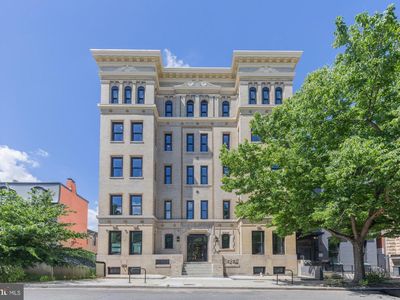
Investment Properties on Sale in the US




DSCR Example to Understand How Investment Loans Work
For rental investors, DSCR is one of the most important loan types to understand.
Steven Glick,
Director of Mortgage Sales
Formula: DSCR = Gross Monthly Rent ÷ PITIA
Now, let’s understand how DSCR works with the help of an example:
- Monthly rent: $2,800
- Principal and interest: $1,720
- Property taxes: $310
- Insurance: $120
- HOA dues: $75
That gives you:
PITIA = $1,720 + $310 + $120 + $75 = $2,225
Now divide rent by PITIA:
DSCR = $2,800 ÷ $2,225 = 1.26
That means the property generates about 26% more monthly income than the monthly housing expense.
To avoid all the calculations, you can use Ziffy’s in-built DSCR loan calculator for an accurate and detailed breakdown.
Why this matters:
- A DSCR above 1.0 means the property is generating enough rent to cover the payment
- A stronger DSCR generally improves pricing and flexibility
- A weaker DSCR does not always kill the deal, but it usually means something else in the file needs to be stronger, such as down payment or reserves
At Ziffy, DSCR ratio of 1.0 or higher is preferred for best terms. However, we also offer a No Ratio DSCR program for properties with DSCR ratio between 0 - 1. The site also defines the DSCR test around rent divided by PITIA.
Why the Loan Structure Matters More Than Most Investors Expect
The property creates the opportunity, but it is the financing that determines what that opportunity becomes.
It affects how many properties you can buy
Traditional income-based qualification eventually runs into a ceiling. As borrower debt rises, qualification gets tighter. Asset-based financing can reduce that bottleneck because the property’s income does more of the work. That is one reason DSCR lending has become such an important product for rental investors.
It changes monthly performance
Two similar properties can produce very different outcomes depending on leverage, reserves, term, fees, and loan type. Rate matters, but structure around the rate matters too. The CFPB notes that factors such as credit score, down payment, and loan type can materially affect mortgage pricing.
It acts as a risk filter
Equity and reserves are not random hurdles. They are there because investment properties carry real operating risk. Vacancy gaps, delayed lease-up, repair bills, and insurance changes hit differently when the file is thin. Reserve guidance for financed properties reflects the same broader principle: stronger liquidity reduces risk.
It determines what kinds of deals are even possible
Some strong investments do not fit a clean, long-term mortgage on day one. Transitional assets, rehabs, and properties with temporary vacancy often need short-term capital first, then permanent financing later. That is why bridge and fix-and-flip products exist in the first place.
It affects how quickly you can scale
The best financing choice is not just the one that gets this deal approved. It is the one that leaves you in position to do the next deal without creating unnecessary friction.
Investment Property Loans at a Glance:
- Best fit for stabilized rental property: DSCR loan, with March 2026 baseline par DSCR rate starting at 6.25%.
- Best fit for transitional or fast-close deals: Bridge loan. Our bridge program is available for 6 to 24 month term, with 30% down, and up to 70% purchase LTV.
- Best fit for rehab and resale: Fix-and-flip loan, with 25% down, 6 to 24 month terms, up to 85% LTC, up to 100% rehab cost, and up to 75% ARV.
- When the financing conversation changes: Once a property has five or more units, it generally moves into multifamily or commercial territory.
Investment Property Loans: A Comparison
Loan Type | Best fit | Core Structure | What matters most |
|---|---|---|---|
DSCR loan | Stabilized rental | Rental-income qualification, no personal income verification, no minimum DTI, minimum 620 credit score, loan amounts $100K to $10M | Rent strength, DSCR, LTV, reserves |
Bridge Loan | Transitional property | Minimum 650 credit score, 25% down, 6 to 24 months, up to 75% purchase LTV, approval within 15 days | Exit plan, property condition, timing |
Fix-and-Flip Loan | Rehab and resale | Minimum 650 credit score, 25% to 30% down, 6 to 24 months, up to 92% LTC, up to 100% rehab cost, up to 75% ARV | Rehab scope, ARV, down payment, timeline |
Multifamily / Commercial | 5+ unit property | Commercial-style underwriting | Property income, operating performance, sponsor strength |
Full Documentation Loan | Fully documented investor | Minimum 620 credit score, 15% – 20% down, up to 30 years, DTI under 43%, 2 months reserves | When strong income and asset documentation support a traditional path |
Types of Investment Property Loans in 2026
DSCR Loans
Ziffy Mortgage DSCR loan is an investor-centric mortgage program built around the property’s rental income rather than the borrower’s personal income or debt-to-income ratio.
Instead of qualifying mainly through W-2 income and personal DTI, the file is centered on whether the property’s rent can reasonably cover PITIA. This makes DSCR especially useful for buy-and-hold investors who want to scale without constantly running into income-based qualification ceilings.
*At Ziffy Mortgage, we also offer No-Ratio DSCR loans, designed for properties with a DSCR between 0 and 1. This means you can still qualify even when the rental income does not fully cover the property’s monthly expenses, provided the deal is structured with a stronger down payment or reserves.
DSCR Loan Features
Requirement | Details |
|---|---|
Minimum DSCR | 1 or higher preferred. Properties below this may qualify under Ziffy’s No-Ratio DSCR Loan. |
Down Payment | 20% |
Credit Score | Minimum 620 |
LTV Ratio | Up to 80% for Purchase and Rate/Term Refinance, Up to 75% for Cash Out Refinance |
Loan Amount | $100K – $10M |
Cash Reserves | 2 months |
Property Use | Investment properties (residential and commercial) |
Who this loan fits best
A DSCR loan is usually the strongest fit for:
- long-term rental acquisitions
- investors building a rental portfolio
- borrowers whose investing capacity is stronger than what their W-2 income alone would show
- investors who want to keep personal DTI from becoming the main growth bottleneck
Bridge Loans
Bridge loans work best when the property needs speed, a short transition period, or a refinance later. Our bridge loan is a quick, interim financing for urgent needs, with underwriting that focuses on property value, equity, and exit strategy rather than traditional income documents.
That makes bridge loan a better fit when the property is not ready for long-term financing on day one, or when the investor needs time to complete repairs, lease up, or move into the next stage of the deal. That makes bridge financing a better fit when the deal is time-sensitive or the property is not yet ready for long-term debt.
Bridge Loan Features
Feature | Requirement |
|---|---|
Credit Score | Minimum 650 |
Down Payment | 25% |
Loan Amount | $100K – $10M |
Loan Terms | 6 to 24 months, ideal for short-term investments or property improvements. |
Eligible Properties | Non-owner-occupied properties: single-family homes, condos, multi-family units, and townhomes. |
LTV Ratio (Purchase) | Up to 75% |
LTV Ratio (Rate Term Refinance) | Up to 70% |
LTV Ratio (Cash Out Refinance) | Up to 65% |
Other Requirements | Proof of existing property equity, exit strategy for loan repayment, and property appraisal. |
Approval | Within 15 days |
Who this loan fits best
Bridge debt is often a strong fit for:
- quick-close acquisitions
- lease-up situations
- transitional properties not ready for long-term debt
- investors who already know the likely refinance or sale path
The part that matters most
The exit strategy is the whole point. A bridge loan works best when the investor already knows what comes next, whether that is a sale, a refinance into DSCR, or a short hold until the property reaches a stronger income profile.
Fix-and-Flip Loans
Fix-and-flip financing is built for short-term projects where value comes from renovation and resale, not from stabilized long-term rent.
This kind of loan is evaluated around project potential, renovation scope, property basis, ARV, and timeline. That makes it very different from long-term rental financing. At Ziffy Mortgage, we are not looking for a property that is fully stabilized today. We are looking for a project that has a clear path from acquisition to renovation to profitable exit.
Fix and Flip Loan Features
Feature | Requirement |
|---|---|
Credit Score | Minimum 650 |
Down Payment | 25% |
Loan Amount | $100K – $10M |
Loan Terms | 6 to 24 months |
LTC | Up to 85% |
Other Requirements | Detailed renovation plan with cost estimates |
Approval | Within 15 days |
Experience Requirement | No previous flip experience required |
Who this loan fits best
This loan is usually the best fit for:
- distressed or outdated properties
- value-add deals where profit depends on renovations
- investors planning to resell rather than hold long term
- BRRRR-style deals where short-term rehab capital is the first phase
What investors get wrong about this product
A fix-and-flip loan is not a cheaper version of another product. It is a project loan. That means the numbers that matter are not just purchase price and credit score. They are also rehab budget, construction scope, ARV, timeline, and exit plan. When those are clear, this product can move quickly. When they are vague, the file gets harder fast.
Full Documentation loans
It is built for investors with strong, documentable income and assets who want a more conventional approval process. Instead of qualifying the deal through property cash flow, we verify the borrower’s income, assets, and debt profile in a traditional way.
Full Documentation Loan Features
Features | Eligibility Criteria |
|---|---|
Credit Score | Minimum 620 |
Down Payment | 15% – 20% |
Debt-to-Income Ratio (DTI) | Less than 43% |
Cash Reserves | 2 months |
Income Documentation | W-2s, pay stubs, 1099s, bank statements, CPA letter for self-employed |
Approval Time | Within 30 days |
Who this loan fits best
This loan often works well for:
- investors with strong W-2 income
- self-employed borrowers who can document income cleanly
- buyers who prefer a familiar mortgage structure
- deals where borrower strength is easier to prove than property cash flow
Where it differs from DSCR
A full-doc loan can be a strong fit for borrowers with very solid personal financials. The tradeoff is that it tends to be less scalable once personal DTI becomes the limiting factor. That does not make it worse. It just makes it better suited to a different borrower profile.
Multifamily or Commercial Financing
Once a property reaches five or more units, the financing conversation changes. That is the line where smaller residential investor lending gives way to multifamily or commercial-style analysis.
For larger multifamily deals, underwriting becomes even more asset-centered. We usually focus more heavily on:
- net operating income
- occupancy history
- rent-roll stability
- expense discipline
- market depth and liquidity
At that point, the property is being treated less like a house with rent and more like an operating income-producing asset.
How to Qualify for an Investment Property Loan
Qualifying for an investment-property loan is not one step. It is a sequence of decisions that either strengthens the file early or weakens it before underwriting even starts.
The strongest files usually do not happen by accident. They happen when the investor already knows the strategy, the numbers, the likely loan fit, and where the file needs support.
Step 1: Define the strategy before you compare products
The first question is not what rate you want. It is what you want the property to do.
Start here:
- Long-term rental hold
This usually points toward a DSCR loan if the property’s rent can support the monthly housing expense. - Fix-and-flip project
This usually points toward a Fix & Flip loan, where the deal is underwritten around the renovation plan, timeline, and after-repair value. - Short-term bridge-to-refinance scenario
This usually points toward a Bridge loan, especially if the property is not stabilized yet or the investor expects to refinance later. - Purchase where personal income is the main strength
This usually points toward a Full Documentation loan, where the lender reviews income, assets, DTI, and credit in a more traditional way.
At Ziffy, those product lines are clearly separated because they solve different problems. A rental property should not be financed like a rehab project, and a transitional asset should not be forced into a long-term structure too early.
Step 2: Underwrite the property before the lender does
This is one of the clearest differences between strong files and weak ones.
Before you apply, you should already know:
- projected rent
- principal and interest estimate
- property taxes
- insurance
- HOA dues, if any
- PITIA
- DSCR, if the deal is rental-based
- expected monthly cash flow after debt service
You can get all these metrics and numbers from our Ziffy’s investment analysis.
Steven Glick,
Director of Mortgage Sales
For conventional-style underwriting, rental income also has to be documented. Fannie Mae’s rental-income guidance makes clear that the lender must obtain documentation used to calculate monthly rental income for qualifying purposes. That means unsupported rent assumptions are not just risky. They are a common source of friction.
A practical rule is simple: if the deal only works with optimistic rents or incomplete expenses, it usually will not look strong once underwriting reviews the real numbers.
Step 3: Treat the down payment as a structuring tool
Many investors focus on the minimum down payment. That is understandable, but it is not always the best way to build the file.
A stronger equity contribution can help you:
- reduce lender risk
- improve pricing
- offset weaker DSCR
- make a borderline file more workable
- keep the structure more conservative if the property is imperfect
This is not just theory. CFPB guidance states that, generally, the larger the down payment, the lower the interest rate you may receive and the more likely you are to be approved. The tradeoff is that pushing too much cash into the down payment can leave the file thin on post-closing liquidity.
The strongest structure usually balances both sides well:
- enough equity in the deal
- enough cash left after closing
Step 4: Prepare reserves properly
This is one of the most underestimated parts of investor financing.
We are not only asking whether you can close. We are asking whether you can hold the property if rent is delayed, the unit sits vacant, or a repair bill shows up after closing.
That is why reserves matter so much. Fannie Mae’s reserve guidance states that additional reserves can be required when a borrower has multiple financed properties and the subject loan is secured by an investment property. It also notes that reserve needs can increase based on the overall risk assessment.
Step 5: Strengthen the borrower side of the file
Even in property-based lending, the borrower still matters.
Credit, documentation, funds sourcing, entity setup, and overall file cleanliness can all affect:
- pricing
- leverage
- flexibility
- approval speed
Ziffy’s published program thresholds show how this plays out across products: the minimum credit score is 620 for DSCR and Full Documentation loans, and 650 for Bridge and Fix & Flip loans.
More broadly, CFPB states that credit score is one factor that affects mortgage pricing, and FTC notes that credit scores can affect both whether you qualify for a mortgage and how much you pay for it.
That is why it helps to clean up the borrower side before you apply:
- pay down revolving balances if needed
- avoid unnecessary new debt
- make sure funds are traceable
- get LLC documents in order if the property will be held in an entity
- organize income documents early if you are using a full-doc loan
Step 6: Choose a property that supports the financing
Not every attractive property is equally financeable. Properties are easier to finance when they have:
- supportable rents
- clean comparable data
- stable demand
- a condition level that fits the chosen loan product
They are harder to finance when the file depends on speculative rent, mixed-use complexity, unusual valuation issues, or a product that does not match the property’s current stage.
At Ziffy, investors can discover cash-flowing rentals, analyze ROI metrics, and finance your rentals – all in one place. That makes it easier to catch a weak fit early instead of finding out in underwriting that the deal needed a different structure.
Step 7: Work with an investor-focused lender like Ziffy
Investment-property files often involve more moving parts than owner-occupied home loans. There may be rental-income analysis, rehab scope, exit planning, property-level cash flow review, or entity documentation. A lender that works in investor scenarios every day is more likely to structure the file correctly from the start.
At Ziffy, the mortgage process sits inside a broader investor workflow that includes AI-native real estate investing, investor-focused agents, specialized loan programs, LLC support, and related services. That matters because financing decisions are better when they are tied directly to the deal, not treated like a generic mortgage file.
Common Mistakes Investors Make With Investment Property Loans
Even a good property can become a weak deal if the financing is structured poorly. Most loan problems do not start in underwriting. They start earlier, when investors choose the wrong product, rely on loose assumptions, or focus too narrowly on one metric. The mistakes below are some of the most common reasons a file gets delayed, repriced, or reworked.
Choosing based on rate alone
A lower rate can still be the wrong loan if the overall structure does not fit the deal.
This is one of the most common mistakes investors make, especially when comparing products that were designed for completely different purposes. A long-term DSCR loan, a bridge loan, and a fix and flip loan should not be judged by rate alone because each one solves a different financing problem.
A cheaper-looking loan can still be the worse choice if it:
- requires too much cash into the deal
- creates more documentation friction than the borrower wants
- limits flexibility on the exit strategy
- slows closing on a time-sensitive opportunity
The better question is not, “Which loan has the lowest rate?” It is, “Which loan gives this deal the strongest overall outcome?”
Using optimistic rent assumptions
This is one of the fastest ways to weaken a DSCR file.
A property can look excellent when the rent assumption is aggressive. It can look much less attractive once underwriting uses more supportable market rent or questions short-term rental income that is not documented well enough. That shift can reduce DSCR, change pricing, or push the deal into a different structure.
This usually happens when investors:
- underwrite from active listings instead of realistic comps
- assume best-case rent instead of supportable rent
- overlook vacancy or turnover risk
- apply future rent growth to a loan that is being underwritten today
The file should still make sense if rent comes in a little lower than expected. If the deal only works under ideal conditions, it is not a strong file.
Ignoring full PITIA
Many investors calculate the payment too narrowly and underestimate how much the true monthly housing expense matters.
PITIA includes:
- principal
- interest
- taxes
- insurance
- association dues
That last part is where a lot of mistakes happen. HOA dues, higher insurance costs, and local property taxes can change DSCR much more than investors expect. A deal that looks fine using only principal and interest can weaken quickly once the full expense stack is included.
This matters because lenders are not underwriting a partial payment. They are underwriting the real monthly obligation tied to the property. The more complete the expense picture is at the start, the cleaner the file usually becomes later.
Bringing enough cash to close, but not enough to hold
A deal can look strong until post-closing liquidity is reviewed.
This is one of the most overlooked mistakes in investor financing. Borrowers often focus on getting to the down payment and closing-cost number, then assume the rest of the file is fine. But lenders are also looking at what remains after closing.
That matters because investment properties are not perfectly predictable. A file becomes more fragile when the borrower closes with very little liquidity left to handle:
- vacancy between tenants
- rent delays
- maintenance or repairs
- insurance increases
- slower-than-expected stabilization
A borrower who has just enough to close may still have a weak file if reserves are thin. Stronger files usually show both:
- enough equity in the deal
- enough liquidity left after closing
Using the wrong product for the asset’s stage
Not every investment property should be financed the same way.
A stabilized rental, a transitional property, and a heavy rehab project all have different financing needs. Problems usually start when investors choose the product they prefer instead of the product the deal actually requires.
For example:
- a stabilized rental may fit a DSCR loan
- a property that needs major renovation may fit a fix and flip loan
- a property that is not ready for permanent financing may need a bridge loan first
Trying to force a transitional or rehab deal into a long-term structure too early usually creates friction. The same is true in reverse. Using short-term debt on a deal that should have been financed with long-term rental debt can create unnecessary cost and pressure.
The loan should match the property’s current stage, not just the investor’s long-term intention.
Assuming the borrower side does not matter in DSCR lending
A DSCR loan shifts the focus toward property income, but it does not remove the borrower from the equation.
This is where some investors get too casual. They hear that the loan is based on rental income and assume that credit, reserves, documentation, and source of funds no longer matter. That is not how strong DSCR files work.
Even in property-based lending, the borrower side still affects:
- rate and pricing
- leverage
- reserve expectations
- flexibility on edge cases
- overall ease of approval
A weaker borrower profile can make a marginal deal harder to structure. A stronger borrower profile can make the same deal easier to approve.
That is why it helps to clean up the borrower side before applying:
- reduce revolving balances if needed
- avoid taking on new debt right before closing
- make sure funds are traceable
- organize entity documents early if the purchase will be made through an LLC
- understand where your credit profile may affect terms
FAQs
What is an investment property loan?
An investment property loan is financing used to buy or refinance real estate that you do not occupy as your primary residence. These loans are structured for investors, so approval can depend on either your personal financial profile or the property’s income, depending on the loan type.
What types of investment property loans does Ziffy Mortgage offer?
Ziffy Mortgage currently offers four main investor loan programs: DSCR loans, Fix & Flip loans, Bridge loans, and Full Documentation loans. Each one is designed for a different use case, from rental-property financing to short-term rehab and transitional deals.
What is a DSCR loan, and how does it work?
A DSCR loan qualifies the deal based on the property’s expected rental income rather than your personal income. In simple terms, the lender compares monthly rent to PITIA, which includes principal, interest, taxes, insurance, and any association dues. This makes DSCR loans especially useful for investors who want to scale rental holdings without relying heavily on personal DTI.
What DSCR does Ziffy usually look for?
For Ziffy DSCR loans, a DSCR of 1.0 or higher is generally the benchmark for the strongest terms. Ziffy also offers a No-Ratio DSCR option for eligible deals that fall below that level.
Do I need tax returns, W-2s, or pay stubs for a DSCR loan?
Not for Ziffy’s DSCR program. At Ziffy, you do not require W-2s, pay stubs, tax returns, employment verification, or a minimum DTI requirement in the traditional sense because qualification is based on property income.
How fast can an investment property loan close?
The timeline depends on the product. Ziffy currently states that Bridge and Fix & Flip loans can be approved within 15 days, while DSCR and Full Documentation loans can be approved within 30 days.
What is the best investment property loan for most investors?
There is no single best loan for every investor. A DSCR loan is often the strongest fit for long-term rentals, Fix & Flip works better for renovation-and-resale deals, Bridge fits transitional or short-term scenarios, and Full Documentation works well when personal income is the strongest part of the file. The right choice depends on the property’s stage, the exit plan, and how you want the deal to be underwritten.